How Functional Rhinoplasty Improves Breathing?

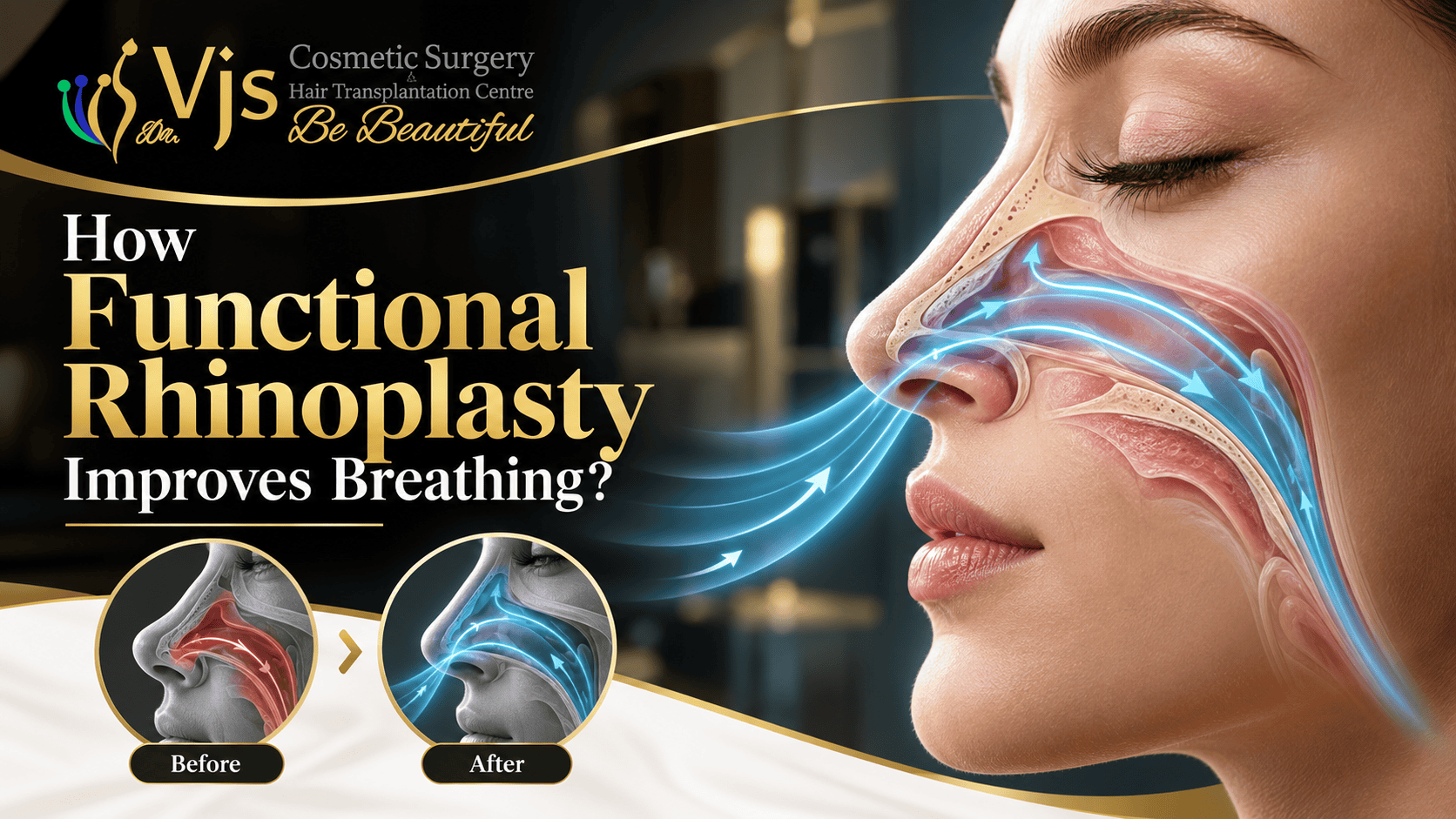
Functional Rhinoplasty is a type of surgery that works to improve airflow through the nasal passages while fixing nasal obstructions such as septal deviation, nasal valve collapse, turbinate enlargement and nasal irregularities that restrict breathing. The aim of functional rhinoplasty in Visakhapatnam is to enlarge the airflow, it maintains the proper alignment and structural support so that the person can breathe easily and take in air without any disruptions.
When people hear the word rhinoplasty, they start thinking about the appearance of the nose, but in reality, it is about fixing the nose within itself so that a person can breathe normally. Rhinoplasty is of two types: cosmetic rhinoplasty, which mainly focuses on the appearance of the nose, and functional rhinoplasty, which focuses more on fixing irregularities.
Guidelines to follow for Functional Rhinoplasty
People who are going through breathing problems on a daily basis. They must undergo functional rhinoplasty for breathing under the personal guidance of a professional doctor. And they must follow the steps that are given by the doctors.
- Preparing for a functional rhinoplasty – Under the functional rhinoplasty breathing guide. The patient needs to complete certain procedures before going through the surgery. He needs to contact a professional surgeon and proceed with further steps under his guidance.
- Avoid previous medicine – The patient needs to understand to stop taking previous medicine just before 2 weeks of functional rhinoplasty surgery, because blood-thinning medicines like aspirin, ibuprofen and herbal medication can become the main reason for bleeding.
- Quit smoking – Smoking is one of the major hindrances to healing from the surgery. The patients need to quit smoking 4 weeks prior to the date of the surgery, and they can refrain from it for two weeks after the surgery to ensure the surgery heals.
- Plan for transportation – The Patients must plan for transportation on the day of the surgery. It is recommended that they arrange a responsible person to take them home from the hospital. They must receive assistance with transportation for 1 week after the surgery instead of driving themselves.
- Considering good surroundings – The person needs to arrange the surroundings in the home itself by arranging soft pillows, following the prescribed medicines and taking soft meals instead of heavy meals for the recovery period of 10 to 14 days.
- Following a healthy lifestyle – The patients after the rhinoplasty surgery need to ensure a healthy lifestyle by getting adequate rest and a balanced diet for the next 10 to 14 days. He must avoid heavy work and focus on recovery. The lifestyle will improve the speed of recovery from the surgery.
Famous Myths About Functional Rhinoplasty Breathing
In India, most of the population is not really aware of rhinoplasty surgery. They perceive it as a normal surgery for the aim of changing their appearance. Here are the common myths that must be clarified –
- Functional Rhinoplasty is only for appearance – The most common misconception on the market is that people go through rhinoplasty to change their appearance, but the actual reason is to correct breathing issues caused by a deviated septum and nasal trauma.
- Rhinoplasty looks overdone – The performance of the skilled surgeon at the hospital clarifies functional rhinoplasty breathing questions about the looks of the patients. They will make sure that the surgery does not look fake. The technical machines are very helpful for successful surgery.
- Functional rhinoplasty gives instant results – People in the market think that functional rhinoplasty heals instantly, but the reality is it takes up to 10 to 15 days, during which the patient needs to follow the medical prescription, avoid transportation and quit smoking. These procedures will speed up the healing.
- Rhinoplasty is a very painful procedure- this is partially true; this procedure is very painful. When the nose is fixed during the surgery, there will be less pain; however, it increases after recovery, but it is mild in nature. After a certain period of time, the pain starts to decrease, and they can live their daily life normally.
Causes of the nasal obstructions
Nasal obstructions can be a major reason for breathing difficulty; they happen when the airflow of the nose is restricted. The main reasons are swelling, inflammation and structural blockage. However, there are structural causes of restricted breathing.
- Deviatum Spectum
- Enlarged turbinates
- Nasal Valve Collapse
- Enlarged adenoids
- Nasal Polyps.
Final Takeaways
Nasal obstruction is a common issue rising in the country, so it is important to identify the issue and get the right guidance under Dr. C.Vijay Kumar, who has years of experience in the field of cosmetic surgery. VJS Cosmetic and Hair Transplant Centre is a reliable clinic in Vizag, Andhra Pradesh, which performs functional rhinoplasty breathing Visakhapatnam region effectively. Patients who are suffering from nasal problems must visit the clinic.
Frequently Asked Questions
- What is the suitable age for functional rhinoplasty?
There is no fixed age for functional rhinoplasty surgery, but it is recommended that the individual be over the age of 15 – 16 years to go for treatment.
2. Does the patient travel after surgery?
It is recommended that the individual restrict travel for the upcoming days after the surgery.
3. Can rhinoplasty be done during a cold?
If a client has a cold, they should immediately inform the surgeon so they can postpone the rhinoplasty.
4. What prescription should I take after surgery?
The patient needs to focus on rest and avoid transportation. Quit smoking and follow a healthy lifestyle.
5. Does previous surgery affect functional rhinoplasty surgery?
The individual needs to share all previous surgeries with the surgeon so that the surgeon can operate accordingly.