
FUE Hair Transplant Procedure, Precautions & Cost
- FUE hair transplant in India
- FUE: DONOR/RECIPIENT AREA
- Book Appointment
- What is FUE hair transplant?
- What to do before treatment?
- What happens on surgical day?
- FUE: after surgery precautions
- FUE Hair Transplant Costs in India
- What is cost of FUE Hair Transplant?
- What you need to know about fue services and their cost
- Why choose Dr. VJs
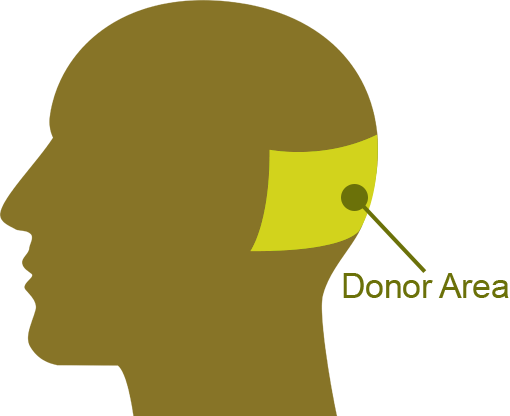
FUE: Donor Area
The donor area is the region from which follicular units are harvested for transplantation. It is usually selected from scalp areas that are relatively more resistant to androgenetic hair loss. Donor hair can provide long-lasting growth after transplantation, but the donor supply is limited and should be planned conservatively; lifelong growth cannot be guaranteed for every follicle.

Recipient Area
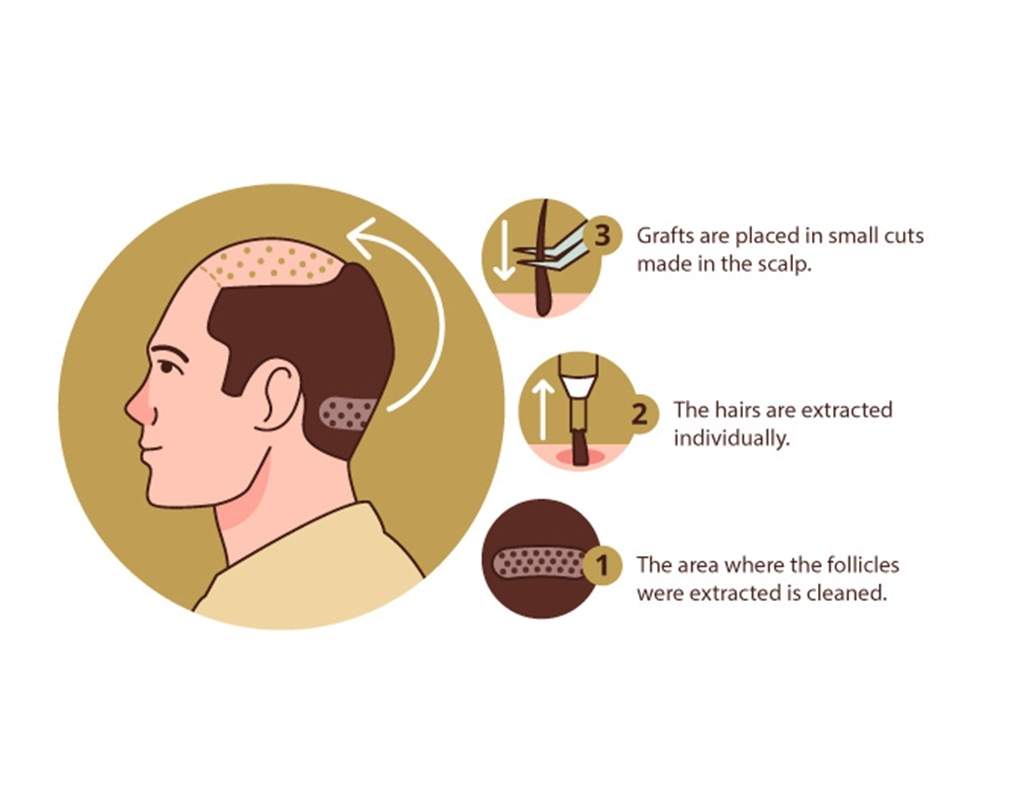
The recipient area is the part of the scalp where additional coverage is being considered. Planning should start with the diagnosis and pattern of hair loss rather than assuming that every thin or bald area should be transplanted. In androgenetic hair loss, both the frontal scalp and crown may be affected, while diffuse thinning can have other causes that should be assessed before surgery. The size and design of the recipient area must be balanced against the patient’s finite donor supply and the possibility of future hair loss.
What is FUE Hair Transplant?
FUE (follicular unit extraction) is a hair-transplant technique in which individual follicular units are removed from a donor area and placed into planned recipient sites. A consultation should first confirm the cause and pattern of hair loss, assess donor density and calibre, review scalp health and medical history, and discuss whether surgery is appropriate.
Hairline design and graft estimates are based on the area to be treated, donor availability, hair characteristics and the need to conserve follicles for possible future thinning. There is no fixed percentage of donor follicles that is appropriate to remove from every patient, and excessive extraction can create visible donor thinning.
FUE can leave small dot-like scars, and the achievable coverage or density varies from person to person. The goal is a realistic, individualised plan rather than a promise of a completely natural or undetectable result. Patients should also understand alternatives, including non-surgical hair-loss management and FUT where appropriate.
What to do before treatment?
- The patient is asked to stop smoking, alcohol consumption, blood thinners, tobacco before 7-10 days of surgery as these can adversely affect the results.
- If the patient is taking any hypertension, diabetes, thyroid medicine then he may continue it but must be informed to the surgeon before surgery.
- The patient is asked to have complete rest before the surgery and to take nutritious diet instead of junk or spicy food.
What happens on surgical day?
On the day of surgery, the scalp is prepared and local anaesthesia is administered. Anaesthesia helps reduce pain, but patients may still feel the injections, pressure, pulling sensations or discomfort, and soreness can occur afterward. The treating team should explain what to expect and how discomfort is managed.

EXTRACTION
With the micro punches of having the diameter less than 1mm, hair follicles are taken out from the safe zone of the scalp as per the determined count. This process is done with extreme care so that scars, pain and any infection can be reduced.

TRANSPLANTATION
Recipient sites are planned according to the proposed hairline, existing hair, graft availability and the natural direction and angle of growth. The aim is appropriate graft distribution rather than promising a specific density; achievable coverage varies with donor supply and hair characteristics.

SHORT BREAK
After one hour of surgery, the patient can take a short break for refreshment and even in the middle of surgery lunch break is also done.
FUE: After Surgery Precautions
After completing surgery some general instructions are given to the patient so that potential risks can be prevented and the result of the surgery can be optimized
On the next day, the patient is asked to visit us for preventive and hygienic hair wash under the supervision of experts. Following preventive instructions are given to patients
- Avoid puling of heavy luggage and bucket full of water
- Activities like walking, running, jogging or any sports must be avoided for at least 7 week
- Patient is asked to sleep with elevated position of head at 45 degree to avoid the post surgery swelling
- Drug abuse, alcohol consumption, smoking must be avoided
How FUE Hair Transplant Cost Is Estimated
FUE pricing should be estimated after clinical assessment rather than from a universal package. The number of grafts is only one factor: donor density, recipient-area size, extraction difficulty, previous procedures, use of non-scalp donor hair, procedure time, facility requirements and the follow-up plan can all affect the estimate.
Cost should not be used as a proxy for outcome. A lower or higher price does not by itself predict graft survival, density or cosmetic appearance, and international price comparisons can be misleading when they do not include the same clinical scope, facility standards, aftercare or revision policy.
Before deciding, ask for a written estimate that explains what is included and review the treating clinician’s qualifications, donor-conservation plan, expected scars, possible need for more than one procedure and how complications or follow-up will be handled. See the main hair transplant guide for broader treatment planning, or contact the clinic for an individual assessment.
What is cost of FUE Hair Transplant?
Factors that can affect an FUE estimate include:
- Graft requirement and donor supply: the treatment area, donor density, hair calibre and long-term conservation plan influence how many grafts can reasonably be harvested.
- Procedure complexity: previous surgery, scarring, difficult donor areas, body-hair use or staged treatment can change operating time and planning.
- Technique and facility needs: FUE may be performed in different ways, but no device or branded variation guarantees a better result. The estimate should reflect the actual procedure and facility requirements.
- Aftercare and follow-up: clarify whether dressings, postoperative reviews, medicines prescribed by the treating clinician and later follow-up are included.
FUE and FUT use different donor-harvesting approaches. Neither is universally superior, and the decision should consider donor characteristics, scarring preference, hairstyle, previous procedures and future hair-loss planning.
FUE Hair Transplant Cost
The final cost can increase or decrease after clinical assessment because graft requirements, technique and procedure complexity vary. Cost should be discussed separately from expected outcome: paying more or choosing a particular technique does not guarantee a better result.
What you need to know about fue services and their cost
Technology-assisted FUE: Some systems can assist parts of follicular-unit extraction, but the exact equipment used and its role vary by clinic and case. Technology does not replace clinical diagnosis, donor planning or surgical judgement.
Body-hair transplantation: Hair from non-scalp donor sites may be considered in selected patients when scalp donor supply is limited. Body hair differs in calibre, growth cycle and texture, so suitability and expected coverage must be assessed individually.
Prices should be based on the individual graft plan, technique and complexity after consultation rather than a fixed starting figure.
Why choose Dr. VJs cosmetic surgery & hair transplantation centre? for FUE
When considering FUE, patients should look at the clinician’s qualifications and experience, donor-area assessment, hairline and graft planning, infection-control practices, informed consent, aftercare and how complications or revisions are managed.
- Individualised assessment and graft planning
- Discussion of FUE alternatives, limitations and scarring
- Donor-area conservation for possible future hair loss
- Clear written aftercare and follow-up guidance
- Transparent discussion of estimated costs and expected outcomes
No clinic can guarantee an undetectable result or a specific graft-survival rate for every patient.
Video
Frequently Asked Questions (FAQs)
Does FUE hair transplant treatment last for a lifetime?
FUE uses follicles from donor areas that are relatively more resistant to pattern hair loss, so transplanted hair can be long-lasting. However, no transplant should be described as guaranteed for life: graft survival varies and non-transplanted hair can continue to thin. Long-term planning may include medical hair-loss management where appropriate.
Is the FUE treatment process painful?
FUE is commonly performed with local anaesthesia, which reduces pain during the procedure. Anaesthetic injections, pressure or pulling sensations can still be noticed, and soreness or tightness may occur afterward. The amount and duration of discomfort vary between patients.
What is the right age for an FUE hair transplant?
There is no single age that automatically makes someone eligible or ineligible for FUE. Candidacy depends on the diagnosis, stability and pattern of hair loss, donor supply, family history, medical treatment options and expectations. Younger patients may need more conservative planning because their future pattern of hair loss may not yet be clear.
What are the precautions?
Before FUE, tell the treating team about all prescription medicines, over-the-counter drugs, supplements, smoking and alcohol use. Do not stop aspirin, anticoagulants, antiplatelet medicines or any other prescribed medication unless the prescribing clinician and surgical team specifically advise you to do so. Preparation instructions should be individualised.
Does FUE hair transplant leave scars?
FUE usually leaves small circular or dot-like scars where follicles are removed. Their visibility depends on punch size, extraction pattern, skin healing, hair length and individual scarring tendency. Scars may become less noticeable with healing, but FUE should not be described as scar-free.
How often is the FUE treatment successful?
FUE outcomes vary and should not be represented by a single universal success percentage. Important factors include the diagnosis and stability of hair loss, donor quality, graft handling, hairline and density planning, surgical technique, healing, postoperative care and future thinning of native hair. Individual expectations should be discussed during consultation.
What is the cost of FUE treatment in India?
FUE cost varies with the number of grafts, donor and recipient areas, technique, procedure complexity, facility and treatment plan. A personalised estimate should be given after consultation and donor assessment. Fixed price ranges can become outdated and may not reflect an individual case.
What is the consultation fee?
Initially, you can book a free consultation once you clear your doubts. You can book an appointment where the digital scalp analysis will evaluate the extent of baldness, density of donor area hair follicles and the density requirement to give you a natural look.
Is it possible for women to get FUE hair treatment?
Women with selected patterns of permanent hair loss may be candidates for FUE, but female hair thinning has several possible causes and should be diagnosed before surgery. The need for shaving, donor availability and the expected benefit vary by patient; FUE is not automatically more effective for women than for men.
How long does it take to recover?
Recovery after FUE is not the same for every patient. Swelling, tenderness, crusting and temporary redness can occur, and the time needed before returning to exercise, helmets, swimming or other activities should follow the treating team’s instructions rather than a fixed universal timetable. Contact the clinic promptly for increasing pain, significant bleeding, spreading redness, discharge, fever or other unexpected symptoms. Visible healing of the donor and recipient sites is different from final hair growth, which develops over a longer period.
Can I do FUE hair treatment twice?
A second hair-transplant procedure can be considered in some patients, but it is not automatically appropriate or necessary. The decision depends on remaining donor supply, scalp condition, previous scarring, the result of the first procedure, future hair-loss pattern and treatment goals. Donor preservation is important because the supply is finite.
How can I find the best FUE hair transplant clinic in India?
When choosing an FUE clinic, review the treating clinician’s qualifications and experience, the assessment of your hair-loss diagnosis, donor-area planning, realistic before-and-after examples, informed-consent process, aftercare, complication management and transparent pricing. Avoid providers that guarantee a particular density, success rate or scar-free result.