
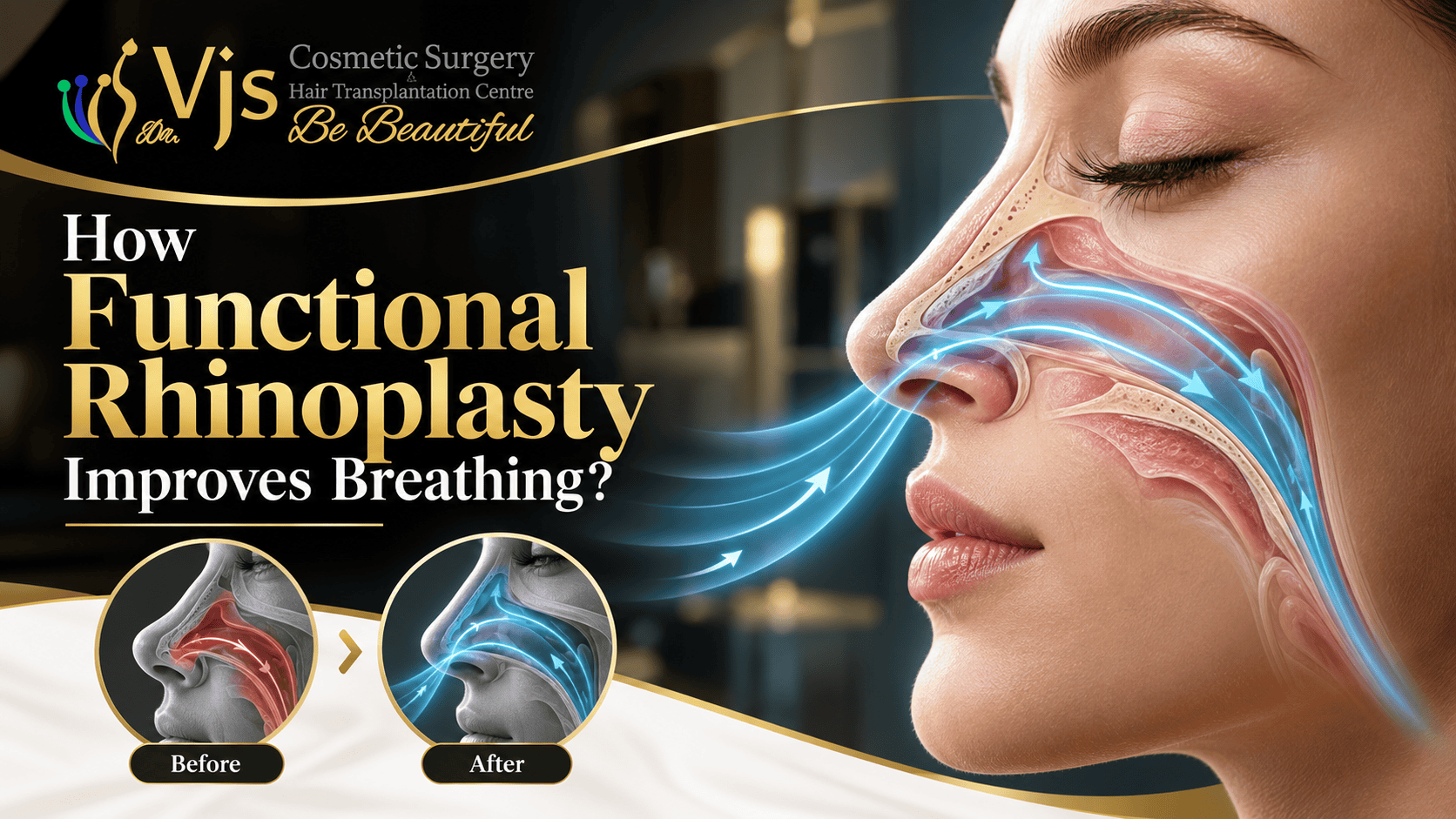
How Functional Rhinoplasty Improves Breathing?

Functional Rhinoplasty is a type of surgery that works to improve airflow through the nasal passages while fixing nasal obstructions such as septal deviation, nasal valve collapse, turbinate enlargement and nasal irregularities that restrict breathing. The aim of functional rhinoplasty in Visakhapatnam is to enlarge the airflow, it maintains the proper alignment and structural support so that the person can breathe easily and take in air without any disruptions. When people hear the word rhinoplasty, they start thinking about the appearance of the nose, but in reality, it is about fixing the nose within itself so that a person can breathe normally. Rhinoplasty is of two types: cosmetic rhinoplasty, which mainly focuses on the appearance of the nose, and functional rhinoplasty, which focuses more on fixing irregularities. Guidelines to follow for Functional Rhinoplasty People who are going through breathing problems on a daily basis. They must undergo functional rhinoplasty for breathing under the personal guidance of a professional doctor. And they must follow the steps that are given by the doctors. Famous Myths About Functional Rhinoplasty Breathing In India, most of the population is not really aware of rhinoplasty surgery. They perceive it as a normal surgery for the aim of changing their appearance. Here are the common myths that must be clarified – Causes of the nasal obstructions Nasal obstructions can be a major reason for breathing difficulty; they happen when the airflow of the nose is restricted. The main reasons are swelling, inflammation and structural blockage. However, there are structural causes of restricted breathing. Final Takeaways Nasal obstruction is a common issue rising in the country, so it is important to identify the issue and get the right guidance under Dr. C.Vijay Kumar, who has years of experience in the field of cosmetic surgery. VJS Cosmetic and Hair Transplant Centre is a reliable clinic in Vizag, Andhra Pradesh, which performs functional rhinoplasty breathing Visakhapatnam region effectively. Patients who are suffering from nasal problems must visit the clinic. Frequently Asked Questions There is no fixed age for functional rhinoplasty surgery, but it is recommended that the individual be over the age of 15 – 16 years to go for treatment. 2. Does the patient travel after surgery? It is recommended that the individual restrict travel for the upcoming days after the surgery. 3. Can rhinoplasty be done during a cold? If a client has a cold, they should immediately inform the surgeon so they can postpone the rhinoplasty. 4. What prescription should I take after surgery? The patient needs to focus on rest and avoid transportation. Quit smoking and follow a healthy lifestyle. 5. Does previous surgery affect functional rhinoplasty surgery? The individual needs to share all previous surgeries with the surgeon so that the surgeon can operate accordingly.
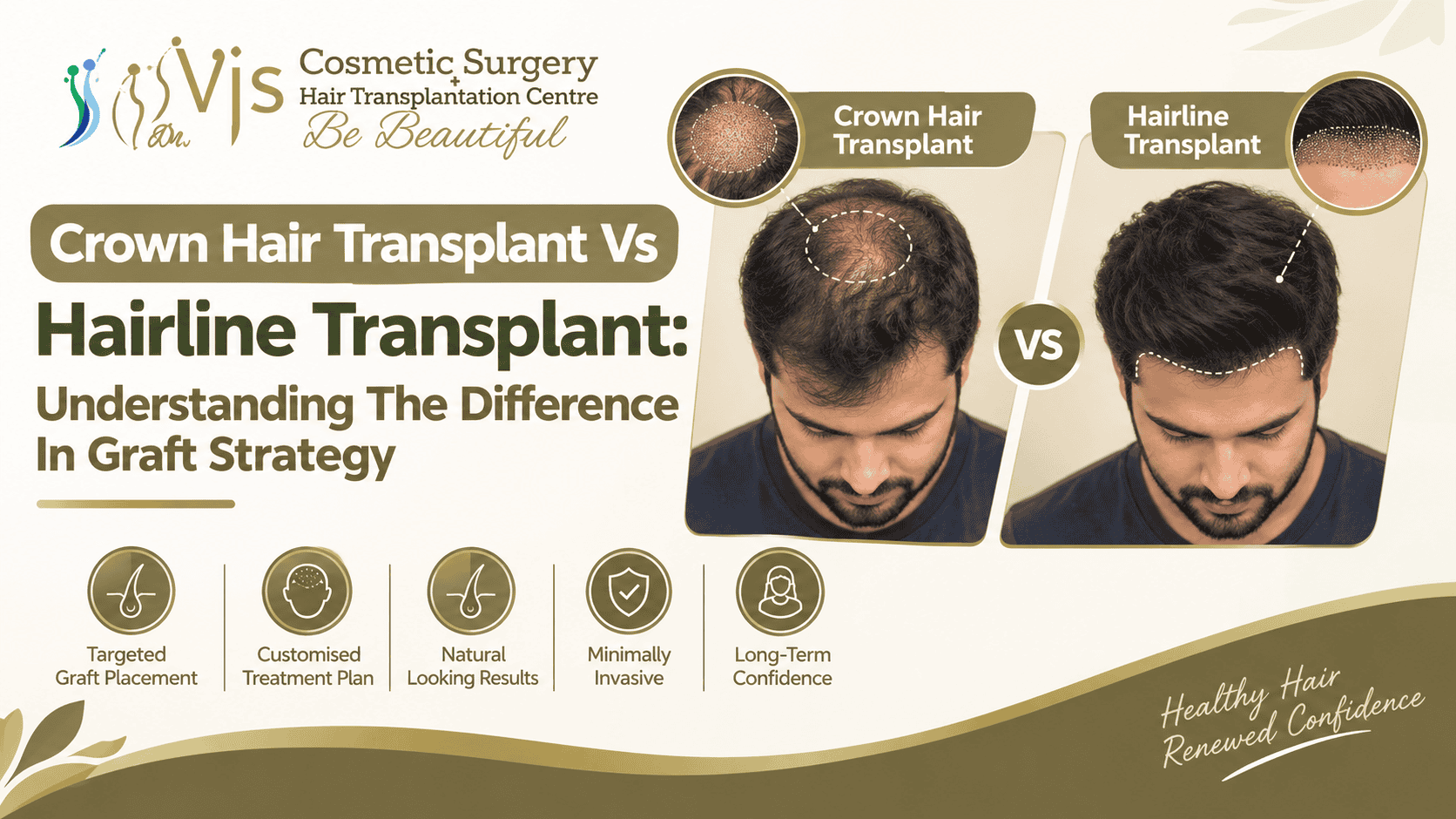
Crown Hair Transplant Vs Hairline Transplant: Understanding The Difference In Graft Strategy
Hair loss can be a harrowing experience for men and women, and it tends to impact confidence and self-esteem. Hair transplant is a long-term solution to baldness and thinning hair, but it is a subtle and painstaking procedure and a combination of medical science and art. Hair transplant is not just about covering the bald area, as hair loss can affect the hairline, crown or both and covering each area requires different surgical procedures for both crown vs hairline hair transplant. The crown vs hairline hair transplant differences matter because of graft count, growth direction, healing time and donor management. Understanding the crown vs hairline hair transplant comparison techniques can help patients plan their hair transplant treatment with clear expectations, especially when both areas are affected at the same time. What Is The Difference? Crown Vs. Hairline Hair loss may affect every part of the scalp in different ways, including the hairline and crown; these two most common areas are treated with hair transplantation surgery. Restoring these areas requires different surgical considerations; hair transplant for the hairline usually creates a natural-looking frontal frame for the face. Whereas crown hair transplant usually requires more grafts and takes longer to show denser visibility. Why Is Graft Allocation Important? The average patient has 5000 to 8000 grafts available from the donor area in a lifetime, depending on the density, hair characteristics and long-term donor preservation requirements. The crown alone requires between 2000 to 3500 grafts while producing a moderate visual improvement. Whereas, the hairline can be restored with 1500 to 2500 grafts and deliver a dramatic face transformation. Why Does Single Hair Grafts Matter At The Hairline? To create a soft transition at the hairline, single hair follicle units are valuable, and surgeons may use larger follicle units behind the hairline for increased density. In this scenario, the objective is not to place as many grafts as possible, but the primary goal is to create a natural transition from forehead to scalp using donor follicles efficiently. Crown Restoration Requires Spiral Reconstruction If grafts were not implemented with respect to the natural orientation, then the crown may look unnatural. The surgeon must consider: More Grafts May Be Required for Crown Restoration The most important difference between hairline and crown transplantation is graft economics. A modest number of grafts can create a significant improvement along a receding hairline because all the new hairs are placed together in a highly visible area at the front of your face. Whereas, in crown hair transplant, a large thinning region may require a sufficient number of grafts to create meaningful visual coverage. Densely visual appearance may depend on factors including: Hair Transplant Depends On The Donor Hair Availability Hair transplant does not create new follicles but redistributes existing follicles from the donor region to the bald area, and a surgeon may examine the following before starting hair transplantation surgery: Conclusion The right hair transplantation treatment for the hairline, the crown or both depends on the patient’s pattern of loss, donor capacity and age. In the crown and hairline, neither area needs more grafts automatically, but the hairline usually requires greater density and effective graft selection because the face frame depends on this. Typically, the crown uses a lower density per square centimeter, but it can become the larger graft consumer because of its broad circular area. The best hair transplant plan is not the one with the highest graft numbers, although it is one that can create the greatest cosmetic improvement while protecting enough donor hair for the future. If you are deciding between a crown vs hairline hair transplant in Visakhapatnam, a full scalp and donor assessment can help to determine where your available graft will provide the most value. You can book an appointment with VJ’s Cosmetic Surgery and Hair Transplantation Centre for hair restoration and cosmetic surgery consultations with treatment planning on the basis of your concern. Dr. C Vijay Kumar has more than 40 years of clinical experience, and you can receive clear information about crown Vs. hairline transplantation surgery and different graft strategies. FAQs How many grafts are required for a hairline? There is no fixed number, but restoring the hairline typically requires between 1000 and 2500 grafts, and proper measurements are needed before estimating a graft target. Why is it called the crown graft Hungary area? The crown can cover a large circular region and requires a follicle to follow a spiral pattern, which is why an aggressive crown needs a sufficient portion of the patient’s donor supply. What should I cover first with a crown or hairline? When donor grafts are limited, surgeons mainly give more priority to frontal framing; however, the right sequence depends on stability and extent of your hair loss. How long does it take to get a hair transplant result? Hair transplantation is a gradual process, and transplanted hair may shed before new growth develops, but your surgeon may provide a more specific timeline based on your procedure.