
Does Lipoma Removal Lead to Large Scars and Recurrence?

Most individuals might not be aware of the term “lipoma”; if you are one of them as well, then you might understand this term through its specific symptoms. Feeling a soft jelly bean on your neck, shoulder, arms or thighs that is quite visible is associated with a lipoma. Now that you have got the name for those rubbery and squishy lumps over any part of your body, it is crucial to understand the right treatment as well. Usually, lipoma treatment is a game of wait and watch, as they get better without treatment; also, sometimes they don’t even cause any pain. However, if you notice rapid growth in their size, which gradually starts affecting your overall look and confidence, then surgical incision becomes a great option. But, hold on! There are a few instances of lipoma recurrence after a few days following the initial surgery, which strongly indicates an incomplete surgical procedure. Although lipoma removal scar recurrence is rare, at about 1% to 5%, it entirely depends on the incision type and the specific technique used for lipoma removal. Welcome to this blog post, where you’ll be introduced to the reasons why lipoma removal surgery includes the chances of recurrence and large scars, so continue reading. Which types of surgical techniques are used for lipoma removal? Different surgical techniques have been used for lipoma removal; the specific technique is selected based on the exact size of the lipoma, the number of lipomas you have and your personal and medical assessment. What leads to large scars and recurrence after lipoma removal surgery? First, understand what leads to lipoma regrowth:- It is important for you to understand that the lipoma recurrence rate is quite low, according to studies by the National Library of Medicine; however, its recurrence depends entirely on the specific type of surgical incision and an incomplete removal. Now, what leads to large scars:- Lipoma removal scar recurrence timeline generally starts gradually, over days and months. What are the risks associated with the lipoma removal surgery? The Bottom Line! Summing up the above-mentioned lines, you might have apparently understood the factors leading to lipoma recurrence and large scars after the lipoma removal surgery. However, this cannot be everyone’s case; this only demonstrates the possibilities after the surgery. Also, if you understand the right techniques that must be followed for lipoma removal scar recurrence aftercare, then your scars can be managed. If you have been struggling with lipoma, then schedule an appointment with your healthcare provider in order to get the right guidance and solution. You can even ask about your specific concerns regarding lipoma removal scar recurrence in Vikhakhaptanam to get precise answers. We, the experts at VJ’s Cosmetic Surgery and Hair Transplantation Centre, also provide different cosmetic surgeries, tailored to custom needs with the aim of boosting self-esteem. Meet our qualified expert, Dr. C. Vijay Kumar, who has gained knowledge in performing jar loss treatments along with cosmetic surgery. FAQs Generally, lipomas can be removed within 20 to 45 minutes; however, if the lipomas are larger in size, then it might take some more time to be removed. No, it is not necessary to choose a surgical method again if the lipoma has regrown; you can discuss it with your healthcare provider before proceeding further. Steroid injections, liposuction and other alternative treatments are still available to remove lipomas other than surgical excision. It does not directly indicate that such lipomas are cancerous; however, incomplete removal- surgery is one of the major reasons- can lead to recurrence. Still, make sure to discuss with your healthcare provider whether those regrown lipomas are cancerous or not. You can choose any topical care after discussing with your healthcare provider to apply over the scar for less visibility. Yes, the scars can be permanent; however, they usually get flattened or less visible with time.
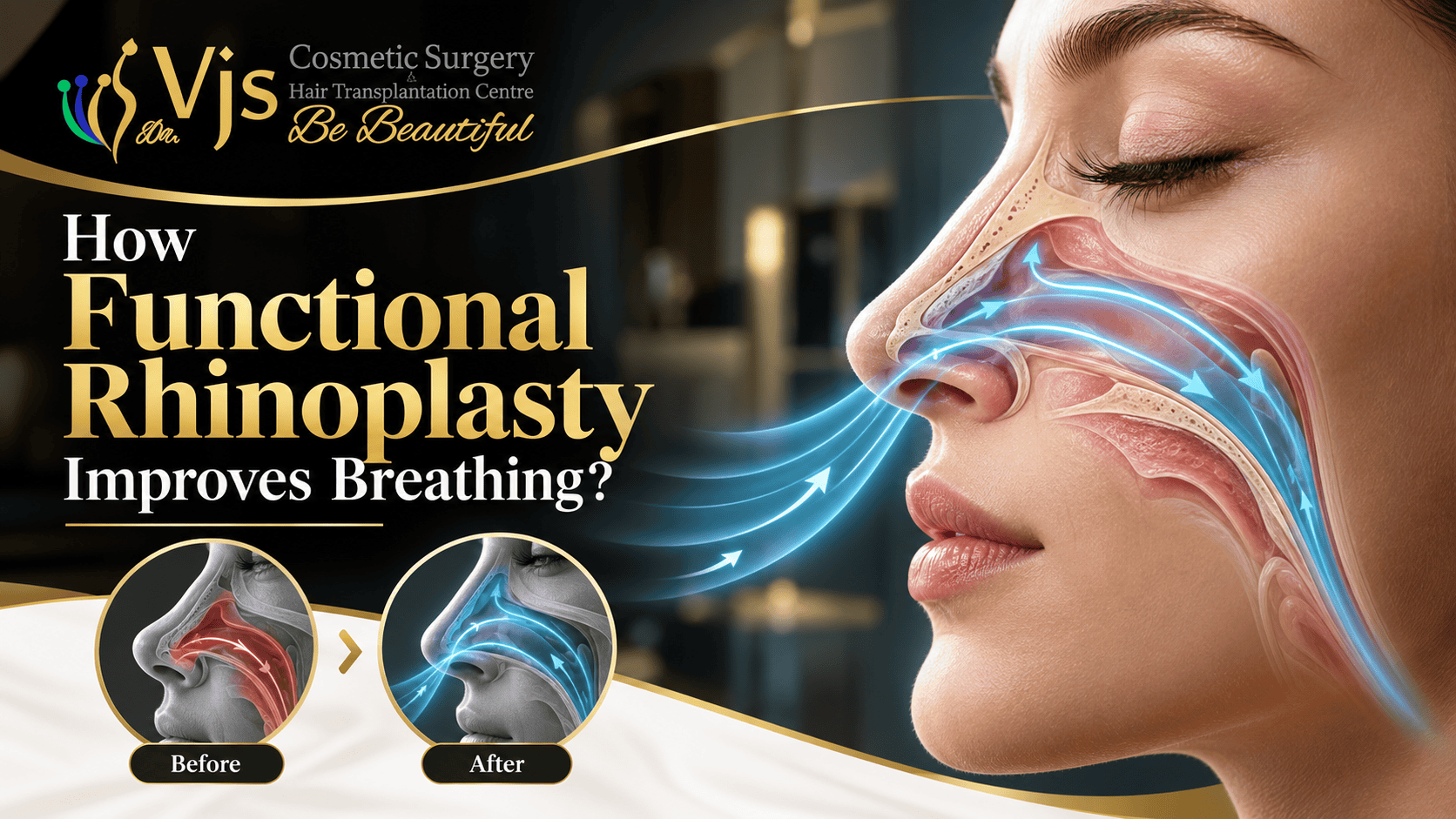
How Functional Rhinoplasty Improves Breathing?
Functional Rhinoplasty is a type of surgery that works to improve airflow through the nasal passages while fixing nasal obstructions such as septal deviation, nasal valve collapse, turbinate enlargement and nasal irregularities that restrict breathing. The aim of functional rhinoplasty in Visakhapatnam is to enlarge the airflow, it maintains the proper alignment and structural support so that the person can breathe easily and take in air without any disruptions. When people hear the word rhinoplasty, they start thinking about the appearance of the nose, but in reality, it is about fixing the nose within itself so that a person can breathe normally. Rhinoplasty is of two types: cosmetic rhinoplasty, which mainly focuses on the appearance of the nose, and functional rhinoplasty, which focuses more on fixing irregularities. Guidelines to follow for Functional Rhinoplasty People who are going through breathing problems on a daily basis. They must undergo functional rhinoplasty for breathing under the personal guidance of a professional doctor. And they must follow the steps that are given by the doctors. Famous Myths About Functional Rhinoplasty Breathing In India, most of the population is not really aware of rhinoplasty surgery. They perceive it as a normal surgery for the aim of changing their appearance. Here are the common myths that must be clarified – Causes of the nasal obstructions Nasal obstructions can be a major reason for breathing difficulty; they happen when the airflow of the nose is restricted. The main reasons are swelling, inflammation and structural blockage. However, there are structural causes of restricted breathing. Final Takeaways Nasal obstruction is a common issue rising in the country, so it is important to identify the issue and get the right guidance under Dr. C.Vijay Kumar, who has years of experience in the field of cosmetic surgery. VJS Cosmetic and Hair Transplant Centre is a reliable clinic in Vizag, Andhra Pradesh, which performs functional rhinoplasty breathing Visakhapatnam region effectively. Patients who are suffering from nasal problems must visit the clinic. Frequently Asked Questions There is no fixed age for functional rhinoplasty surgery, but it is recommended that the individual be over the age of 15 – 16 years to go for treatment. 2. Does the patient travel after surgery? It is recommended that the individual restrict travel for the upcoming days after the surgery. 3. Can rhinoplasty be done during a cold? If a client has a cold, they should immediately inform the surgeon so they can postpone the rhinoplasty. 4. What prescription should I take after surgery? The patient needs to focus on rest and avoid transportation. Quit smoking and follow a healthy lifestyle. 5. Does previous surgery affect functional rhinoplasty surgery? The individual needs to share all previous surgeries with the surgeon so that the surgeon can operate accordingly.