Hair transplant: One of the suitable methods of saving your hair locks
Free Video Consultation

Category: FUT

What-are-the-tips-to-increase-hair-growth-following-the-hair-transplant

Hair transplant: One of the suitable methods of saving your hair locks

Loading

Hair Loss: Don’t let the problem go unnoticed

The condition of hair loss can be the reason for genes, age, hormones, and other concerns. With the hair fall control treatment, you are in a state to increase your confidence and get a natural appearance.

Hair Transplant

A hair transplant is a surgical method for addressing hair loss. During the treatment, the hair follicles are extracted from the back of the scalp and transplanted to where hair growth is less. The procedure of hair transplant in Vizag makes the utmost difference in boosting your confidence and self-esteem that gets lost due to hair loss. So, choose this option to have thick hair growth and natural-looking results.

Procedure for hair transplant

Hair transplant has two major types:

  • FUT (Follicular Unit Transplantation)

During FUT, the surgeon extracts a strip of hair from the back of the scalp and transplant it to the area where hair growth is less. The procedure might leave a linear scar easily covered if you keep your hair long.

  • FUE (Follicular Unit Extraction)

During FUE, the surgeon extracts the hair follicles from the scalp and then transplants them to the lesser hair growth area.

No doubt, both procedures are known to offer the most effective results. The precise method of doing the surgery and inventive techniques makes a huge difference. And that’s the possible means to make everything balanced.

Recovery time of hair transplant

If recovery makes you uncomfortable, you don’t have to worry about the same at any cost. The surgeon will give you all the necessary specifications on what needs to be done. Like:

  • Take the required medications on time
  • Don’t follow strenuous regime
  • Be mindful about your diet plan
  • Sleep by keeping your head elevated
  • Do not expose your scalp to scorching sunlight
  • Avoid any activity that makes you sweat

Give yourself enough time to recover

Make sure you give yourself enough time to recover to see the necessary results. When you follow all the necessary steps the results are on time. So, from the 1st to the 12th month, you must be careful and ensure nothing goes wrong. If you find difficulty at any possible step, get the necessary care from an experienced surgeon.

Schedule an initial consultation to make an informed decision

If you are planning to get hair transplant surgery, schedule an initial consultation with Dr. C Vijay Kumar, who has years of expertise. Most importantly, he has the proper technical understanding to handle everything with utmost care. If you think you are a suitable candidate for the surgery and want to know more, then schedule an initial consultation with Dr. C Vijay Kumar. Make sure to discuss any doubt or concern you have on your mind to get yourself the proper care. Depending on your condition, the doctor will personalize your hair transplant surgery.


What is a hair transplant? What is the cost of a hair transplant in India?

What is a hair transplant? What is the cost of a hair transplant in India?

Loading

What is hair transplant  Or hair restoration?

Dr Vjs VizagHair transplant is a blessing for people suffering from hair loss problems. It is a technique in which surgeons will transplant hair on the scalp of the patient. The surgeon takes hair from the donor area or sometimes from the back of the scalp.

In fact, there are two procedures which are becoming popular among people.

FUT

Follicular unit transplantation is a procedure in which the doctor will perform the surgery by taking out the strips from the donor area and transplanting it into the problematic area.

FUE

Follicular unit extraction is a procedure in which a surgeon will perform the surgery by extracting the hair individually and transplant it into the problematic area.

What you should keep in your mind while selecting the clinic?

You should make sure that the surgeon who is going to perform your surgery should be highly-qualified and experienced. It will help you in achieving the desired results. Talking about the cost, you should not trust anyone who is performing the surgery at lower rates because there are chances that you might end up getting undesired results. It also affects your mental health. In fact, there are numerous clinics available that claim that they perform the best surgery. But they are not trained, not having the proper equipment, furniture, and much more. But they are experts in convincing you. So be careful and don’t trust the first surgeon you are going to meet.

What is the cost of hair transplant surgery?

At Dr VJs, we will keep the patient’s experience, safety, quality, survivability, results in mind before performing the hair restoration surgery. If you are thinking about the cost of the surgery then there are things that you should keep in your mind that are mentioned below:

  • Qualification & experience of the surgeon.
  • The location of the clinic
  • The procedure you are going to choose.
  • How many grafts surgeon will transplant
  • Facilities surgeon is going to provide
  • Whether he is having the latest technology or not and much more.
  • The main root of hair loss.
  • The surgeon will examine the donor area.


What are the questions you should ask from the clinic before undergoing the treatment?

  • Whether the surgeon or assistance, who is going to do the surgery?
  • You should ask your surgeon to show qualifications and experience.
  • Which diagnostic system do you have?
  • How much time surgery will take?
  • What procedure is beneficial for me?
  • What kind of services will the clinic provide?


AT VJC, we take care of the things that are mentioned below:

  • The success rate of the treatment.
  • Safety of the patient.
  • Privacy of the patient.
  • The patient will get the maximum density.


How undergoing hair transplant treatment can transform your appearance?

Hair Transplant Expectations: What Surgery Can and Cannot Change

Loading

A hair transplant can redistribute selected follicles from a donor area to areas with reduced coverage, but it is not a cure for every type of hair loss and it does not create an unlimited new supply of hair. Good planning starts with the diagnosis, donor capacity and the likely future pattern of thinning.

What a transplant may help with

For suitable candidates, transplantation can improve coverage in selected areas such as the frontal hairline, temples, mid-scalp or crown. The achievable density depends on donor supply, hair calibre, scalp characteristics, the size of the treatment area and how grafts are distributed.

FUE and FUT are different harvesting approaches

With FUE, follicular units are removed individually. This leaves multiple small extraction scars in the donor area rather than no scars at all. With FUT, a strip of donor scalp is removed and closed, leaving a linear scar. The most appropriate method depends on donor characteristics, hairstyle preferences, prior surgery and graft requirements.

What surgery cannot guarantee

  • A transplant cannot guarantee a particular density, hairline appearance or graft survival for every patient.
  • It does not stop untreated native hair from thinning in other areas.
  • It cannot overcome severely limited donor supply.
  • It may not be appropriate until the cause of active shedding or scalp disease is assessed.

Why long-term planning matters

A hairline that looks appropriate today should also be planned with possible future loss in mind. Using too much donor hair early can restrict options later. In some patients, medical treatment or observation may be discussed alongside surgery to help manage ongoing native-hair loss.

Questions worth discussing before surgery

Ask how your diagnosis was reached, what donor limitations were identified, why a particular technique is being recommended, what type of scarring to expect, how many stages may be needed and what follow-up is available if healing or growth does not progress as expected.

For a broader overview, see the main hair transplant guide and the hair loss information. An individualized plan should be based on an in-person or clinically appropriate assessment rather than appearance pressure or a promise of a specific result.

Everything you need to know about Failed Hair Transplant treatment

Everything you need to know about Failed Hair Transplant treatment

Loading

Overview

With the innovative and latest technique to deal with hair loss like hair transplant, the patient can get the best results. Unfortunately, some of the hair transplant fails when the surgery is done with little experience and less technical expertise.

Failed Hair Transplant

Different reasons are included for failed hair transplant and some of them are:

  • Improper surgical method

This leads to thinning in the donor area or the presence of a scar. Getting the treatment from an inexperienced surgeon will make the treatment performed improperly.

  • Technical failure

Technical failure is caused when the surgery is as an out-dated method or the surgeon uses the unsuitable instruments during treatment.

  • Not a suitable candidate

Certain patients are not suitable candidates for the surgery and they need to be advised to undergo different treatments to deal with hair loss.

What are the situations where hair transplant is needed?

It is important to correct the outcome of poor quality hair transplant treatment. Some of the causes of poor outcomes are:

  • Defective hairline

Undergoing the treatment with unprofessional surgery will aggravate the alopecia syndrome and this will give an unnatural look and people can easily notice the person has undergone the surgery. In that case, the hair follicles need to be placed for reconstructing the hairline.

  • Wide scar or stretched scar following FUT

FUT is a strip procedure that includes surgical removal of a strip of scalp and this often leads to the permanent linear scar on the back of the scalp. Over time, the patients can face the widening of the scar and this is the reason long-lasting and effective solutions.


What are the rescue options for failed hair transplant?

At VJ’s, our doctor will make a careful and detailed assessment to choose the best hair restoration technique for getting the desired results. Our doctor can fix the bad results of the treatment with the following ways:

  • Correcting bad hair transplant

To correct the issues of previous surgery, the doctor may decide to take the grafts and transplant them with other methods to take healthy grafts for implantation. The surgeon aims to give you the best possible results which look natural.

  • Plug removal

If camouflaging the plug-looking grafts does not work then a more intensive method is needed. The doctor will remove the poorly placed grafts, re-distribute them, and reduce the size to create the natural-looking results.

  • Fixing scars

Patients who have a strip scar due to the surgery, have the best option to hide the scar by growing hair and this covers it appropriately. However, this solution is temporary. For a permanent solution, the doctor will use the FUE technique and transplant the hair follicles to minimize or hide the scars.

How Much Time Does Someone Need To Wait For Proper Hair Growth After Hair Transplant

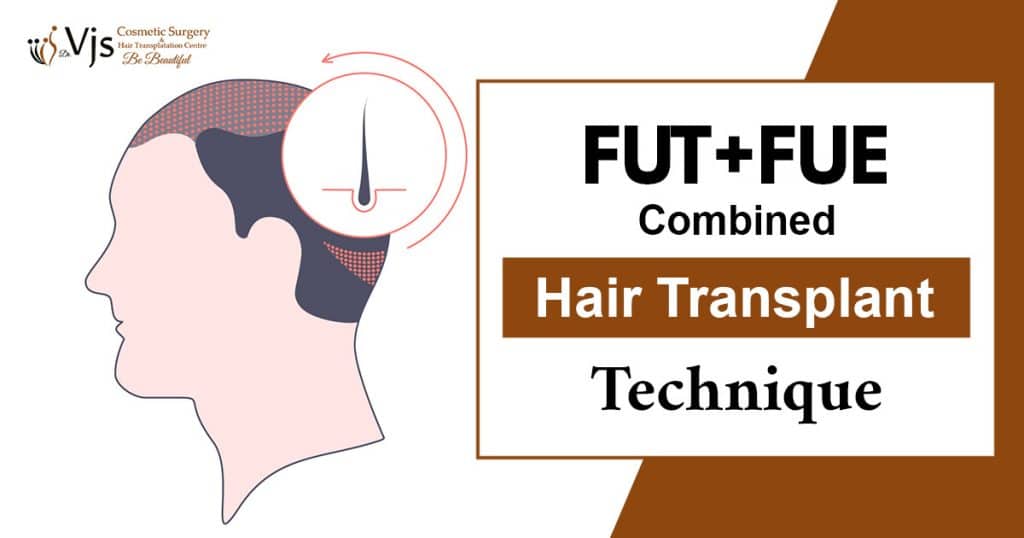
FUT + FUE Combined Hair Transplant Technique Vizag

Loading

Hair Transplants

Hair transplant surgery is a process in which hair roots are transferred from one part of the scalp to another part. The process involves the transfer from the donor area to the recipient areas. While the donor area still shows ample growth, the recipient area is the balding area. Hair Transplant ensures that DHT resistant hair is implanted on the balding surface.

The FUT + FUE Combined Hair Transplant Technique:

The hair transplant combined technique involves both the FUT and FUE technique to extract the required number of grafts and deliver aesthetically pleasing goals. The combined technique requires a surgeon who has expertise in both techniques. The employment of the technique also depends on the amount of hair on the donor areas and the requirement of the recipient area.

Choosing FUT + FUE Hair Transplant: when is it feasible?

  • If the grade of Norwood baldness is more than V (VI-VII)
  • When a patient needs an extremely high-density solution
  • Patients who don’t have enough safe donor supply
  • When it is required to fix a maximum number of grafts per session so that the desired restoration goal is met.

Which skills are required to perform the FUT + FUE Hair Transplant?

Experience: The surgeon’s in-depth knowledge and experience in hair transplants are required. The surgeon should have credit for performing the FUT + FUE hair transplant. He should also be accredited and recognized by the restoration societies.

Artistic skills: The surgeon must have artistic skill and proficiency in understanding the natural hairline design and how the hair roots should be placed to look aesthetically pleasing. The surgeon must have both precision and proficiency to deliver the desired results.

Decision-making: The surgeon must have exceptional decision-making ability so that he carries out the surgery in a well-executed manner. Using the donor areas efficiently and getting the desired results depends on the decision-making ability of the surgeon


So, if you are planning to undergo hair transplant surgery, you must avail the services of the best surgeon in your area. Be careful to opt for a well-known clinic. You can isolate the best names by doing online and offline research and getting in touch with people who have undergone transplants at various clinics.

When should Hair Transplant Surgery be performed?

Pattern Baldness: If the patient suffers from Androgenic alopecia or the pattern baldness, then hair transplant surgery is required.

Grade of baldness is greater than III: hair transplant surgery is often recommended when the grade of badness is more than 3.

Autoimmune Disorder is not the reason: Hair transplant surgery is not a suitable option when the patient has an autoimmune disorder (Alopecia areata or spot baldness).

What is a hair transplant surgery? Explain the Types and Process of hair transplantation?

Loading

Almost everyone experiences hair falls once a life, the normal hair loss conditions reveal that you are losing almost 50 to 100 strands a day. But if you are losing more than 200 strands a day, then you are suffering from excessive hair fall, or this condition leads you to baldness too. In this condition, you may need to undergo a hair transplant.

What is a hair transplant?

Hair transplantation is a surgical treatment, which is specially designed to treat certain types of hair fall. No matter, what type of hair loss you have, this is one of the best treatments, which always results in natural-looking hair growth.

There are several people who are suffering from hair loss as well as baldness. So, this is the best treatment for them, because it always gives you the desired results. But you have to choose the hair transplant method according to your hair loss condition and reason behind this condition.

Let’s have a look at hair transplantation methods.

FUE

The other name of FUE is Follicular Unit Extraction, which is the most recent and advanced treatment method, that is designed to treat your hair fall condition. In this treatment option, your surgeon harvests a single hair follicle from the back of the head. Thereafter, transplant at the affected area for proper hair growth. No doubt, this is a little expensive treatment but does not result in scarring or any other type of side effects. That’s why this treatment option is well-known and taken by people who are suffering from excessive hair fall.

FUT

This is additionally known as the strip harvesting method and Follicular Unit Extraction. This is a conventional or traditional method, which is less expensive as compared to FUE treatment. In addition to this, you may not know that in this treatment option, your surgeon collects the strip of hair follicles from the back of the head, which is known as the donor area. And then transplanting them in the affected area, so that you can get the proper hair growth without any problem. Well, this treatment results in scarring at the donor site, which can fade away over time.

Benefits of both treatment options

As we told you above, there are several benefits of these treatment options. These are-:

  • These results in permanent as well as natural-looking hair growth. After getting these treatments, there is no need to go with any other type of treatment.
  • There are no such risks of side effects.
  • This is a completely safe and secure procedure, so you do not take tension about anything.

Working of hair transplantation

In this procedure, your surgeon first prepares the donor area and then collects the hair graft from the donor area. Once he did with hair follicle collection, he prepares them in a lab and then transplants at the affected area, so that you can get rid of hair fall completely.

Hair Transplant Assessment: Diagnosis, Donor Hair and Technique Selection

Loading

Hair loss can have many causes, including androgenetic alopecia, temporary shedding, scalp disease, nutritional problems and medication-related changes. A hair transplant may be considered for some people, but it should not be presented as the automatic answer to every type of hair loss.

Assessment comes before surgery

Before planning a transplant, the clinician should review the pattern and duration of hair loss, examine the scalp and donor region, and consider relevant medical history. Additional tests may be appropriate when the pattern suggests an underlying condition or when active shedding has not been explained.

Donor hair sets practical limits

Hair transplantation redistributes existing follicles; it does not create an unlimited new supply. Donor density, hair calibre, scalp laxity, previous procedures, scarring and the size of the treatment area all influence what coverage may be realistic.

FUE

Follicular unit extraction (FUE) removes follicular units individually from the donor area. It avoids a single linear donor scar, but it still creates multiple small extraction scars. The pattern and visibility of those scars can vary with extraction density, healing and hairstyle.

FUT

Follicular unit transplantation (FUT) removes a strip of donor scalp that is then divided into follicular-unit grafts. It typically leaves a linear donor scar. FUT may be considered when its donor-management advantages fit the patient’s anatomy, graft needs and preferences.

No technique is automatically the “best” one

FUE and FUT have different trade-offs. The decision should consider donor preservation, scarring preferences, required graft numbers, previous surgery, healing history and possible future procedures. In selected cases, more than one approach may be discussed over time.

Plan for future hair loss

Transplanted follicles do not prevent untreated native hair from thinning elsewhere. A conservative hairline and long-term donor strategy can therefore be important, especially when hair loss is still progressing.

For more background, review the hair loss information and the main hair transplant guide. Any recommendation should follow an individualized assessment rather than a promised result, a patient anecdote or a fixed graft package.

Male Pattern Hair Loss: Causes, Diagnosis and Treatment Options

Loading

Male pattern hair loss, also called androgenetic alopecia, is a common form of progressive hair thinning. It usually begins with recession at the temples, thinning through the frontal scalp or gradual loss of density at the crown. The pattern and speed of change differ from one person to another, so treatment planning should start with a diagnosis rather than an assumption that every case needs surgery.

Why male pattern hair loss develops

Androgenetic alopecia is influenced by genetics and the response of susceptible hair follicles to androgens, particularly dihydrotestosterone (DHT). In affected follicles, repeated hair-growth cycles become shorter and the hairs gradually become finer. This process is different from sudden shedding caused by illness, nutritional deficiency, major stress, medication changes or some scalp disorders.

If hair loss is unusually rapid, patchy, associated with scalp inflammation or accompanied by other symptoms, a medical assessment can help identify whether another condition is contributing.

Assessment before choosing treatment

A clinician may review the pattern and duration of hair loss, family history, scalp condition, current medicines and relevant medical history. Examination of donor density is important when hair transplantation is being considered because transplanted follicles must come from a limited donor area.

Blood tests are not required for every person with typical male pattern hair loss, but they may be considered when the history suggests another cause of shedding or a nutritional, endocrine or systemic problem.

Non-surgical treatment options

Evidence-based medical treatments may help some patients slow further loss or improve density. Options can include topical minoxidil and, for selected adult men, prescription medicines that reduce androgen effects. These treatments are not suitable for everyone and should be discussed with a qualified clinician because benefits, side effects, contraindications and monitoring needs vary.

Patients should not start, stop or change prescription hair-loss medication solely because of online advice. A clinician can help decide whether treatment is appropriate and how long it should be assessed before judging the response.

Where hair transplantation fits

Hair transplantation redistributes existing follicles from a donor area to selected areas of thinning. It does not create new follicles and does not stop future loss in untreated native hair. For this reason, long-term planning matters, especially in younger patients or anyone with continuing progression.

Two commonly discussed approaches are FUE hair transplantation, where follicular units are removed individually, and FUT, where a strip of donor scalp is removed and divided into follicular-unit grafts. The most appropriate method depends on donor characteristics, hairstyle preferences, scar considerations, graft requirements and the surgeon’s plan.

Questions to ask before surgery

  • What is the likely diagnosis and is the hair loss still progressing?
  • How strong and stable is the donor area?
  • How many grafts are realistically available now and for possible future procedures?
  • What type of scarring should be expected with the proposed technique?
  • What are the risks of poor growth, infection, visible scarring, shock loss or an unnatural hairline?
  • How will ongoing native-hair loss be managed after transplantation?

Results vary with donor quality, surgical planning, healing and the progression of underlying hair loss. No clinic can guarantee a specific density or permanent appearance for every patient.

For a personalised evaluation, review the hair transplant information on the site or use the contact page to arrange a consultation.

When the combined options of FUT + FUE Hair Transplant with PRP are required?

When the combined options of FUT + FUE Hair Transplant with PRP are required?

Loading

A hair transplant is the best procedure to treat hair fall conditions in both males and females. This procedure has two classes such as FUT and FUE, these are valuable to get the desired look. This PRP is known as Platelet-rich plasma therapy, which is useful to treat certain types of hair fall.

In this therapy, your specialist collects blood cells from your own body and then prepare them to inject or infuse it at the affected areas on the scalp. If you are planning to undergo this hair transplantation, then you need to get a hair transplant in Visakhapatnam, since there are so many best hair transplant clinics, which will give you the mind-blowing service.

First of all, you need to understand when the combinational treatment is required.

Here are some points that will depict you the need for the combined FUT + FUE Hair Transplant.

When Patient does not have enough Donor’s hair

No doubt, these procedures alone gives you mind-blowing results along with permanent hair growth. However, the combined treatment options offer you several other benefits and double your chances to get fuller hair growth. Well, the combined procedure is performed when a patient does not have enough donor hair to transplant in the affected area. With the combined treatment option, your specialist will collect the hair from other parts of the body and scalp as well.

When a patient is suffering from Extreme Norwood baldness

You may not know that there are almost 7 grades of Norwood baldness. The hair transplant types are performed according to the grade of baldness or hair fall. 

When a person wishes to grow too much hair.

It is advisable when a person wants to fulfill the demand for fuller hair growth with Permanent results. If you are one of them, who need fuller and thicker hair growth, then you need to undergo the combined procedure of hair transplantation. With the combined options your specialist will collect the mega hair grafts from the donor area to transplant at the affected area.

The role and benefits of the combined treatment along with PRP injections

PRP injections are valuable to improve the chances of the best results or hair growth as well. This will offer below-mentioned benefits-:

  • These combined procedures with PRP injection give better outcomes along with thicker hair growth.
  • These are useful to improve density as well as the thickness of transplanted hair
  • You will surely get the full coverage with the better growth of hair
  • You can recover faster after getting the combined procedures along with PRP injections.

What are the different types of hair transplant for the regrowth of hair naturally?

Loading

Throughout history, we can see that different hairstyles have been considered by people to look young and attractive. When hair loss gets triggered men and women start feeling stressed which can make the person lose their self-esteem.

No doubt, there are various reasons which result in this condition like medications, health-related issue, environmental pollutants, and nutritional deficiency. The problem can also result because of hormonal imbalance and genetic influence. Studies have shown that by the age of 35 around 40% of the men face this problem. In the case of women by the age of 60, hair loss becomes around 30% noticeable.

Different types of hair transplant

The 2 most important methods of solving the problem are by undergoing a hair transplant. According to your situation and circumstances, the doctor will let you know which method is going to work best for you. Keep in mind that you need to choose a surgeon who is best in their job and experience.

In case you are planning to get Hair Transplant in Visakhapatnam then you should book your consultation with our surgeon to get a reliable treatment plan.

Surgical Hair transplant

  • With the technological advancement, the field of science has revolutionized a lot which has made the hair transplantation treatment even better. The method and technique of doing the surgery help the patient to see the regrowth of hair which is permanent and looks natural also. The hair grafts are transplanted in such a way that the surgeon can make the hairline look natural. There are different methods used in this like:
  • FUE:  Follicular Unit Extraction in which the hair follicles are taken one by one from the donor area. After that, the hair follicles are transplanted where hair growth is very less.
  • FUT: Follicular Unit Extraction is the method in which a strip of hair is taken from the donor area and then the hair grafts are transplanted where hair growth is very less. 

No matter which method you choose the results will be best and with these methods, the scars are not easily visible.

Non-surgical Hair Transplant

In case, the patient is not willing to undergo the surgery then there is a non-surgical option to consider. One of the approaches is NT grafting. In this method, the hair will be inserted into the skin second layer. This method can give permanent or temporary results. The hair attached is custom designed and fitted so that they can match existing hair. This way the balding area will be filled.

Apart from that, some other options are hair extension, PRP method for hair, laser hair stimulation, and hair bonding.

```html ```