Common Hair Care Mistakes: Natural Ways to Repair Damage
Free Video Consultation
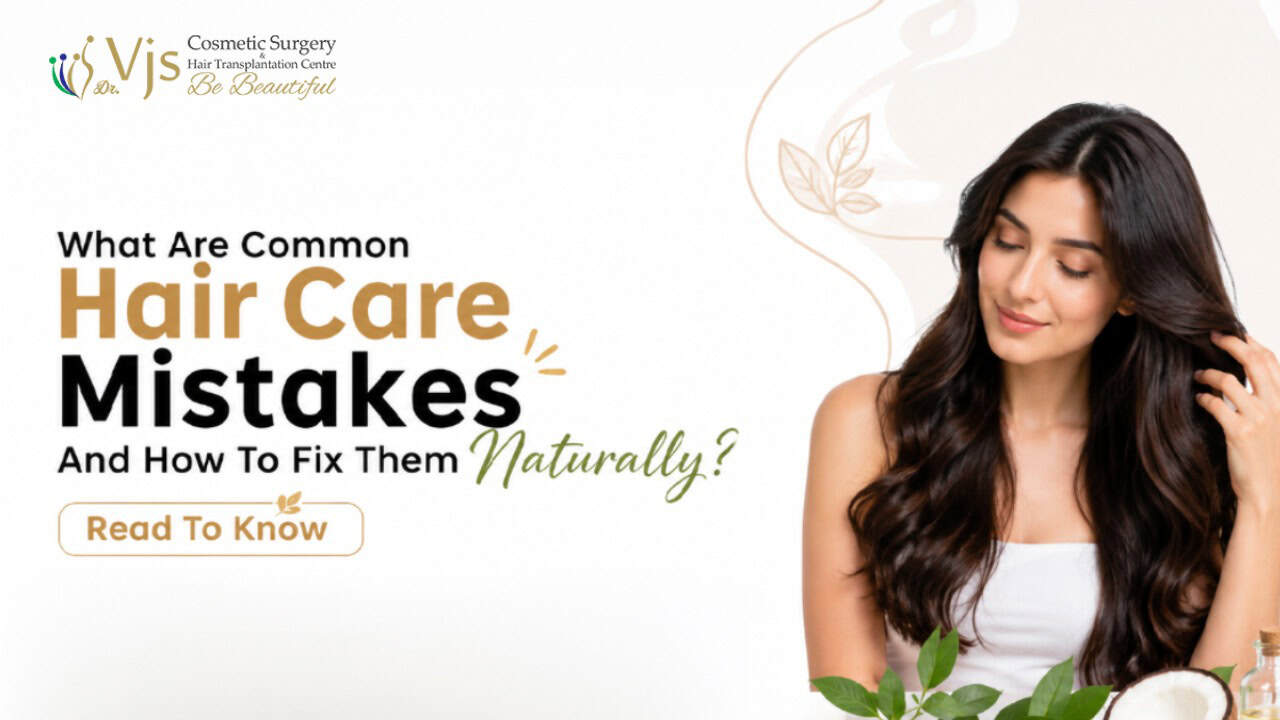
Young woman with healthy, shiny hair, demonstrating hair care tips.

What Are Common Hair Care Mistakes And How To Fix Them Naturally? Read To Know

Loading

In the search for the beautiful and healthy tuft of hair, you go into habits that may harm your hair and scalp. Those habits include washing hair too often, brushing wet hair, towel drying, applying conditioners to roots and tight hairstyling. The small hair care mistakes will disrupt your gorgeous hair. The change of health care habits to hair care mistakes may damage the outer protective layer of the hair and also cause split ends and breakage. But no worries, you can get your hair back to its glory with the help of the right decision-making and the use of natural remedies. Through this blog, you will get to know about the common hair care mistakes and fix them naturally.  Hair Care Mistakes With Their Natural Fixing Process  Overuse Of Chemical-Based Hair Dyes  Using dyes containing ammonia and its by-products and artificial fragrances can affect the quality of hair and irritate your scalp. Ammonia, along with its by-product, opens the hair cuticle and changes its structure internally, causing dehydrating effects and protein loss. So to maintain the quality of your hair and its natural glory, it’s better to use herbal-based products instead of chemical-based dyes. Herbal-based products such as henna and indigo function as deposits of color and cover the white hairs without affecting the scalp and damaging the protective hair cuticle.  Using The Wrong Shampoos  Most of the shampoos contain chemicals and wetting agents that remove the oil from the hair in a vigorous manner. This usually leads to the effect where the scalp compensates for the loss of oil by producing more oil. Instead of using the wrong shampoos, use the cleansers for cleansing your hair and scalp without any hair loss.  Using Products Containing Chemicals  Even the products labelled as natural also contain chemicals that get deposited on the hair shaft and lock the moisture of the hair. While buying the products for your hair, try to buy the products containing henna, shikakai and other natural green ingredients.  Towel Drying And Brushing Wet Hair  Wet hair is the weakest state of the hair. Towel rubbing and wrong brushing may damage your hair and lead to excessive hairfall. Gently dry your hair with the help of a soft cotton cloth and use a broad-tooth comb to detangle your hair. The best technique to detangle the hair is to start from the ends and then go up. The sealing conditioners are the best choice for safe detangling of the hair.  Ignoring The Health Of The Scalp The scalp is the base for the health of hair. Neglecting this area can be responsible for dandruff, clogged hair follicles and impaired growth of hair. For the better health of the scalp, scalp detox is required. The mixture of Reetha, juice, and jaborandi has natural antiseptic properties for the healthy hair follicles.  Conclusion  Instead of using harsh products, using natural products containing ingredients like aloe vera and argan oil is beneficial for hair health and repairing past damage. Natural and consistent care of hair results in shiny and strong hair. Washing the hair two to three times per week may protect the natural oils of your hair. Natural remedies to protect your hair are safe and cheap, which gives you long-lasting results. For better results, you can engage with Dr. C. Vijay Kumar to manage your hair health under the guidance of experts at VJ’s Cosmetic Surgery And Hair Transplantation Surgery Centre with the best services.  FAQ’S Is it okay to wash my hair with hot water or not? Hair wash with hot water may make your hair dry and remove the natural oil from your hair, so it’s recommended to wash hair with lukewarm water.  How can hair breakage be stopped naturally? The hair breakage is due to the damaged hair, but you can manage it by massaging your scalp with plant oils.
Read More »
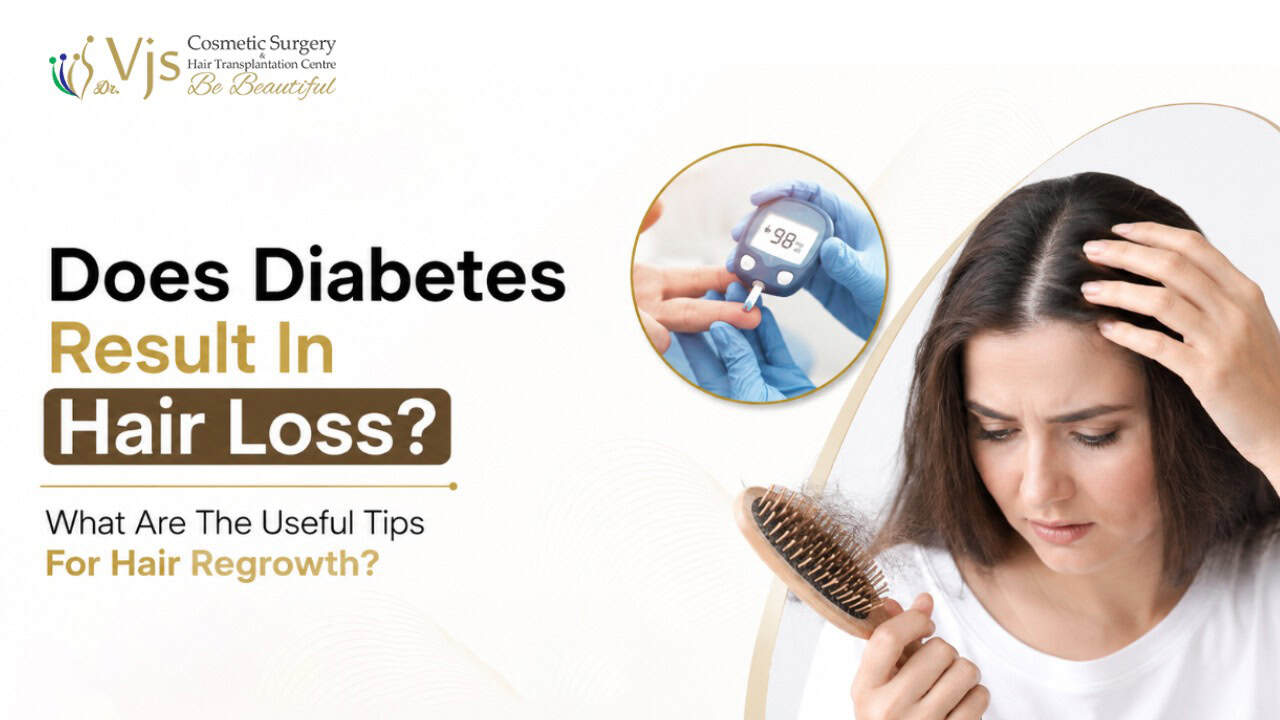
Woman examining hair loss with diabetes management device and hairbrush.

Diabetes and Hair Loss: Possible Links, Evaluation and Treatment Options

Loading

Diabetes does not cause the same type of hair loss in every person. Some people with diabetes may notice diffuse shedding or slower regrowth, while others may have an unrelated condition such as androgenetic alopecia, thyroid disease, iron deficiency, alopecia areata or a scalp disorder. High blood glucose, associated medical conditions and periods of physical stress can affect the normal hair-growth cycle, but bald patches should not automatically be attributed to diabetes. What should be checked when hair loss occurs with diabetes? A useful assessment starts with the pattern and duration of shedding, scalp examination, current medicines, recent illness, weight changes and other symptoms. Where clinically appropriate, a doctor may also consider nutritional or endocrine causes. Diabetes medicines should be continued or changed only according to the clinician managing the condition; hair loss is not a reason to alter treatment on your own. Good diabetes management is important for overall health, but tighter glucose control is not a guaranteed hair-regrowth treatment. A balanced diet with adequate protein and micronutrients can support normal hair biology. Supplements are most useful when a deficiency or another medical indication has been identified rather than taken routinely for every case of shedding. Hair treatment depends on the diagnosis Temporary shedding may improve after an underlying trigger settles, whereas pattern hair loss often needs a separate management plan. The hair loss overview explains common diagnoses and non-surgical options. Procedures such as PRP or GFC therapy may be discussed in selected patients, but they are not substitutes for investigating the cause of hair loss. A hair transplant is generally considered for suitable candidates with stable, transplantable hair-loss patterns and adequate donor supply. Diabetes itself does not decide candidacy; overall health, glucose control, wound-healing risk, medications and the type of hair loss need individual review before surgery. If you have persistent shedding, progressive thinning or new bald patches, use the contact page to arrange an assessment rather than relying on a general hair-care routine alone.

Read More »

DIY Scalp Masks and Hair Fall: What They Can and Cannot Do

Loading

Home scalp masks may make dry or oily hair feel more manageable, but they should not be presented as cures for hair loss. Hair shedding can come from many causes, including pattern hair loss, telogen effluvium, thyroid or nutritional problems, alopecia areata, scalp inflammation and medication or illness-related triggers. Sudden or patchy loss therefore needs assessment rather than an overnight remedy. What to know before using a DIY scalp treatment Ingredients such as aloe vera, coconut oil, yoghurt or other household products may condition the hair shaft or temporarily soothe some people, but evidence for meaningful hair regrowth is limited. Lemon juice, onion juice, essential oils and other concentrated ingredients can also irritate sensitive skin, so they should not be treated as universally safe or effective. If you choose to try a home product, avoid using it on broken or inflamed skin, stop if burning or rash develops, and do not assume that leaving an ingredient on the scalp overnight improves its effect. Persistent dandruff, scaling, itching or redness may need diagnosis and targeted treatment rather than repeated masking. When hair fall needs more than home care Progressive thinning, a receding hairline, distinct bald patches or prolonged shedding should be evaluated for the underlying cause. Start with the hair loss guide for an overview of common diagnoses and treatment pathways. For non-surgical procedure information, you can also review PRP therapy and GFC therapy, noting that suitability and evidence differ by condition. Hair transplantation is not a treatment for every type of hair fall and should be considered only after the pattern of loss, donor area and medical suitability are assessed. For an individual evaluation, use the contact page.

Read More »
Woman smiling as friend places flower crown on her head outdoors.

गर्मियों में बाल झड़ना और आयुर्वेदिक जड़ी-बूटियां: क्या सबूत बताते हैं?

Loading

गर्मियों में पसीना, धूप, बार-बार धुलाई और हेयर-केयर आदतें बालों व स्कैल्प को प्रभावित कर सकती हैं। जानें कि आयुर्वेदिक जड़ी-बूटियों के बारे में क्या कहा जा सकता है, क्या नहीं, और कब चिकित्सकीय जांच ज़रूरी है।

Read More »