
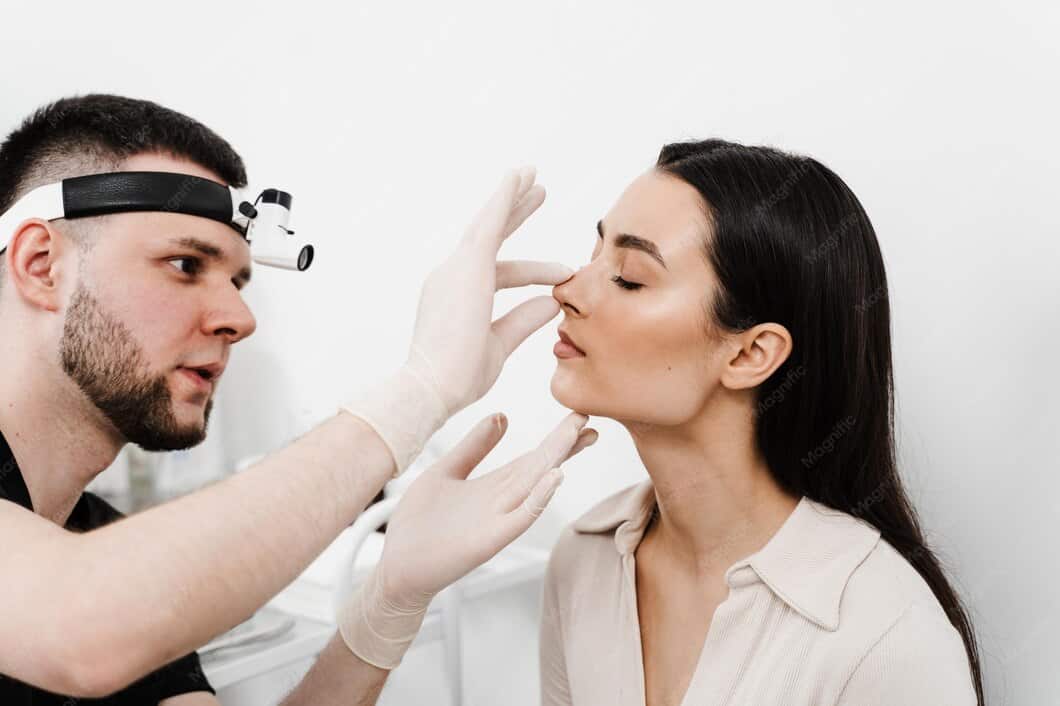

Open and closed rhinoplasty describe how a surgeon accesses the nasal framework; they do not represent a simple “better” and “worse” option. The approach should be selected after examining the nose, understanding the changes being considered, reviewing breathing function and considering previous surgery or injury.
What is the difference?
Closed rhinoplasty uses incisions inside the nostrils. Open rhinoplasty adds a small incision across the columella, the strip of tissue between the nostrils, which can provide wider exposure of the nasal framework. The amount of reshaping required—not the incision alone—has a major influence on recovery and complexity.
When wider exposure may be useful
An open approach may be considered when the surgeon needs extensive access for complex tip work, major structural reconstruction, some revision procedures or graft placement. It is not automatically required for thick skin, breathing problems or every previously operated nose. Those factors are assessed together with the specific anatomy and surgical plan.
When a closed approach may be considered
A closed approach may suit selected cases where the required changes can be performed through internal incisions. It should not be described as suitable only for “minor” surgery or as guaranteeing faster recovery. Some technically significant changes can be performed closed, while some apparently limited changes may still be better approached openly.
Breathing function must be considered separately
Rhinoplasty may include functional work when nasal obstruction is related to structural problems, but open rhinoplasty is not automatically the correct choice for every breathing complaint. Septal deviation, nasal valves, turbinates, previous trauma and other causes may need assessment before the surgical plan is chosen.
The main rhinoplasty guide explains procedure planning, potential risks and recovery considerations in more detail.
What about scars and recovery?
Open rhinoplasty leaves an external columellar scar in addition to internal incisions. Scars often become less noticeable with maturation, but their final appearance varies and should not be promised to disappear. Closed rhinoplasty avoids that external incision but still involves internal healing.
Returning to work, exercise and social activities depends on swelling, bruising, the extent of surgery, individual healing and the surgeon’s instructions. A one-week universal recovery promise is not appropriate. Patients should obtain activity guidance from their own surgical team.
Questions worth asking at consultation
Ask why a particular approach is being recommended, what structural work is planned, how breathing will be protected, where scars will be located, what complications are possible and whether revision surgery could be needed. To discuss an individual nasal concern, use the contact page.