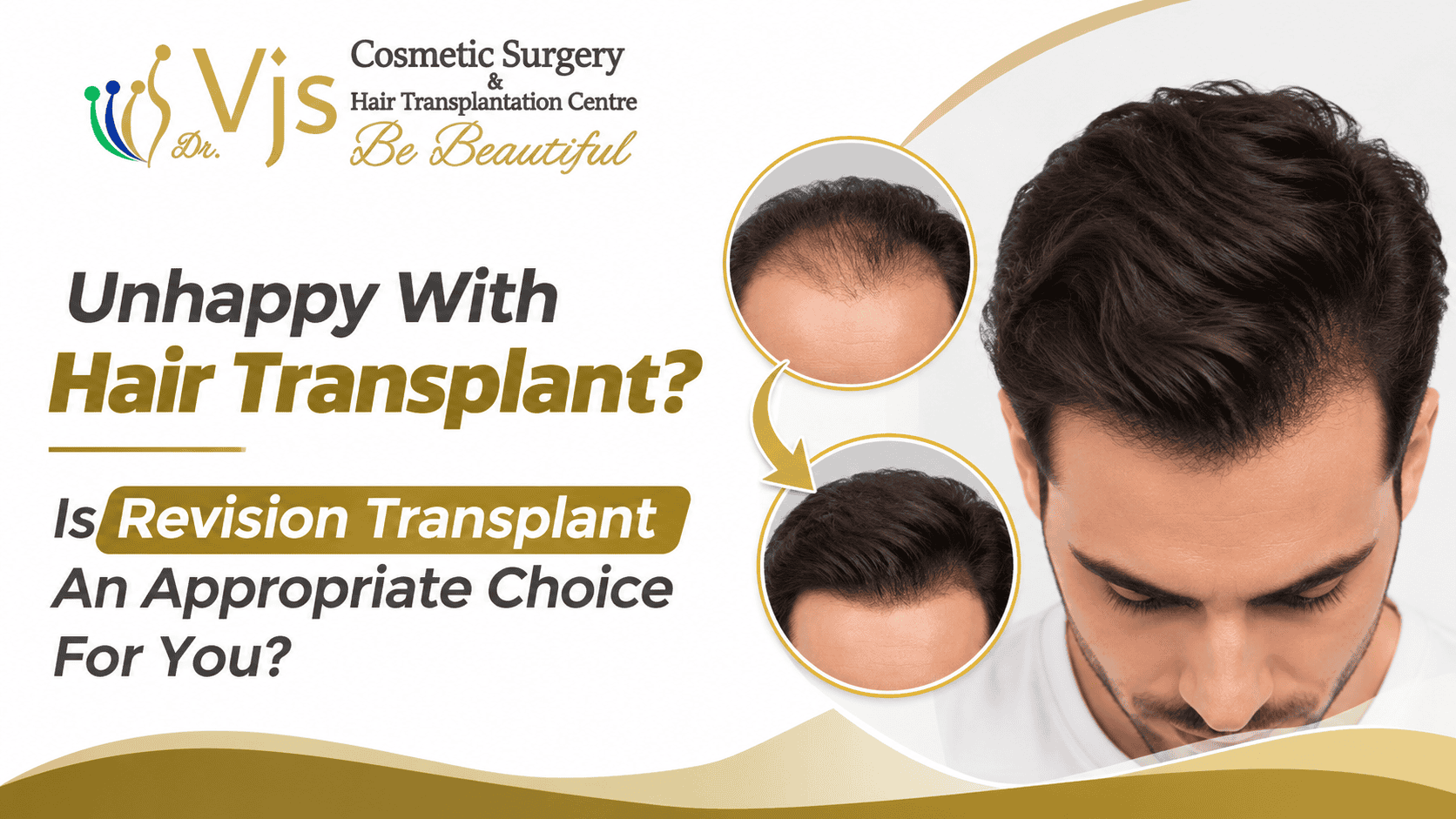

Revision surgery is one concern that is not discussed as a reality of the hair transplant industry. Clinics don’t deal with it. Mostly, patients don’t find out about it until they are researching someone else’s preventive experience or living through it themselves. But the demand for revision hair transplant planning is real, significant and the reason behind it is important to understand is useful for those who have not yet had their first hair transplant procedure.

This is not about unnerving people away from hair transplantation. It gives results that genuinely improve lives. The point is that, when done well, it is the significant standard, and the gap between procedures that meet it and those that don’t is more than enough that a meaningful number of patients end up with the requirement of a hair transplant revision procedure. What creates the gap, and what patients can do before their first hair transplantation procedure to make sure they are not in position afterwards. That’s what this blog is about.
What is the actual meaning of revision?
- Revision in hair transplant means including various corrective procedures. It also means adding density to the area where the original procedure was not delivered, where survival of the graft was less than it should have been or where the implanted graft count is not always sufficient for the coverage the patient has promised.
- It also means addressing the problems related to design, such as an unnatural hairline created at another position, a leading edge with the wrong texture, a temple angle that doesn’t look right or a graft placement pattern that looks like plants instead of being grown.
- Design revision and density revision both have different causes and distinct levels of corrective complexity but share a common origin: something went wrong in the original procedure that may have gone wrong with better planning and execution.
Poor survival of graft: when the procedure is not planned, whatever is planned
- The easiest category of revision requirement is the result that looks thinner than it should, where the density achieved falls short of what the graft count should be. When this happens at range, then maybe it’s the execution problem.
- The survival of graft is the proportion of transplanted follicles that establish themselves in the recipient area and produce permanent hair. When the procedure is performed with accurate technique, survival rates are in the range of 85% to 95%. When that number decreases, when a patient with a graft count of 2500 ends with 1600, that fall has to come from somewhere; mostly, it comes from execution failure.
Practical summary
The need for revision is not random. It has causes, but most of them are preventable. The patients who end up with revision are those who choose the clinic without any verification. But procedures like hair transplantation always need to be done at clinics where the surgeons perform the surgical work and design a natural-looking hairline. At Vj’s Cosmetic Surgery & Hair Transplantation Centre, the process of consultation covers all the factors that commonly drive the need for revision and expertise. Dr. C. Vijay Kumar performs each stage of surgery with precision, realistic expectations and quality results. Not because revision is even likely with care, but because the decisions made before the initial procedure are the ones that determine whether the revision becomes a question.
FAQ’S
Why are some patients not satisfied with their first hair transplant procedure?
The patients are not satisfied with the first transplant because of many reasons, including low density, unnatural appearance and progressive hair loss.
Is surgery always performed to solve a problem with a bad hair transplant?
Not always, only in severe cases is a revision transplant required, because other non-surgical alternatives are also available to fix a bad hair transplant.
How did I come to know transplantation revision is right for you?
You came to know about transplantation with concerns including sufficient donor hair, real expectations, proper evaluation and sufficient time for healing.
What are considered disadvantages of a revision hair transplant?
The disadvantages of revision hair transplant include limited graft supply, increased scarring and sometimes a worse appearance