
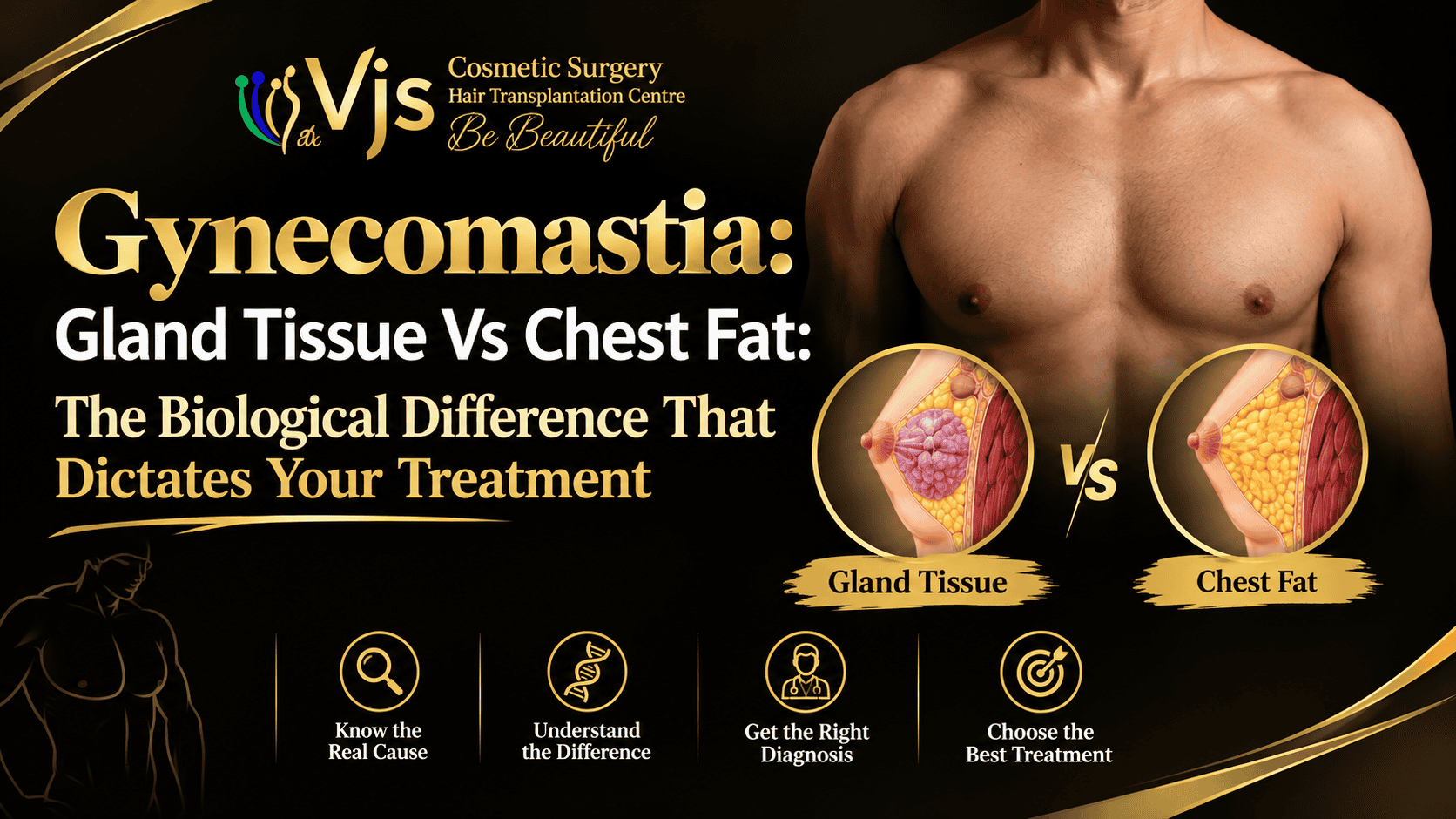

Enlarged chest tissue among men is common, but it causes confusion among them as they observe changes in their chest appearance. Sometimes this occurs during adolescence and disappears on its own with time, but some men experience gynecomastia later in their life. This condition can occur due to anything including hormonal imbalance to the use of certain medications.
Understanding gynecomastia Vs. fat can be confusing because both conditions can make a man’s chest look enlarged. However, both conditions are different; gynecomastia is related to the growth of glandular breast tissue, while chest fat is associated with fatty tissues stored around the chest. Knowing the gynecomastia gland Vs. fat differences can help you understand why your chest looks enlarged and what type of treatments can be appropriate.
Recognizing the gynecomastia vs. fat comparison can also make it easier to discuss chest appearance during a professional examination. Factors such as body weight, hormones, age, genetics and lifestyle can all impact the chest.
What Is Gynecomastia?
An enlargement of male breast tissue, and it commonly occurs due to an imbalance between estrogen and testosterone activity in the body. It is different from normal fat; it involves actual enlargement of glandular tissues around the nipple area, and it can affect one side of the chest or both sides. Gynecomastia can occur in different stages of life, including:
- Puberty
- Adulthood
- Later life
In some conditions, it occurs temporarily, especially during puberty, but others may persist and become a long-term concern. If you do a comparison between gynecomastia and chest fat, the presence of firm tissue around the nipples is one of the important clues that may point to gynecomastia.
What Is Chest Fat?
Excess fatty tissue stored around the chest is referred to as chest fat, and generally, it is related to whole-body fat instead of enlargement of the breast gland. Men who gain weight may observe additional fat around several areas such as:
- Chest
- Abdomen
- Waist
- Back
- Arms
- Face
The other difference is that chest fat may feel softer than glandular tissue, and its appearance also changes because overall body weight increases or decreases. In the comparison between the two, chest fat may be associated with adipose tissue, whereas gynecomastia involves glandular breast tissue.
Gynecomastia Vs. Chest Fat: Key Differences
- Types of Tissue
The primary difference between gynecomastia Vs. chest fat involves the type of tissue, as gynecomastia involves glandular breast tissue and chest fat consists mainly of excess adipose tissue. Understanding the difference is important because fat reduction and glandular tissue removal are not the same treatment options.
- How The Chest Feels
Generally, chest fat feels soft and evenly distributed, while gynecomastia may feel firmer, particularly around the nipple or areola. Apart from this, a firm or rubbery area under the nipple can indicate gynecomastia, but physical evaluation is needed to determine the exact cause.
- Relationship With Weight
Chest fat is directly associated with body fat; losing body weight can reduce the amount of fat stored around the nipples. But in the case of gynecomastia, it may remain even after reduced body weight, as glandular tissue does not necessarily disappear with dieting or exercising.
- Appearance of Nipple Area
Gynecomastia can create a more prominent or puffy skin around the nipple and areola, whereas chest fat enlargement is often more spread across the chest. However, appearance alone cannot always differentiate gynecomastia vs. chest fat.
- Response To Exercise
Exercise can reduce overall body fat and help to improve chest muscles. This method is particularly helpful when excess chest fat is primarily concerned, but exercise does not directly reduce enlarged glandular breast tissue.
- Causes
Chest fat occurs due to excess calorie intake and weight gain, whereas gynecomastia can have several possible causes, including hormonal changes, certain medications and is common with increasing age.
- Treatments Approach
Treatment for chest fat may involve weight management, exercise, nutrition and body fat reduction, but gynecomastia may need a different approach depending on its cause after examination.
Conclusion
Understanding gynecomastia vs chest fat is important because these two conditions may look similar but involve different types of tissues and require different approaches to treatment. Chest fat is commonly associated with overall body fat levels and can be reduced with weight management and exercise, but gynecomastia may remain even after exercise and weight loss.
Suppose you are in doubt about gynecomastia Vs. fat in Visakhapatnam, then avoid relying only on appearance. A professional evaluation can help to identify the cause and guide you toward a treatment plan. For more information about gynecomastia Vs. chest fat, you can book an appointment with VJs Cosmetic Surgery and Transplantation Centre. Dr. C Vijay Kumar has more than 40+ years of experience in clinical practice.
FAQs
Can chest fat look like gynecomastia?
Yes, excessive fat around the nipples in men can create an appearance similar to gynecomastia, and a professional examination is required to identify whether it is caused by fat or glandular tissue.
Can losing weight get rid of gynecomastia?
Reducing overall body weight can reduce the extra fat around the chest but may not remove established glandular breast tissue.
Can chest exercises particularly burn chest fat?
No, chest exercises only strengthen and build the chest muscles but cannot burn chest fat specifically.
What treatments are available for persistent gynecomastia?
The treatments may depend on the cause and severity, and options may involve observing the causes, selected medical treatments or surgery to remove excessive fat.