
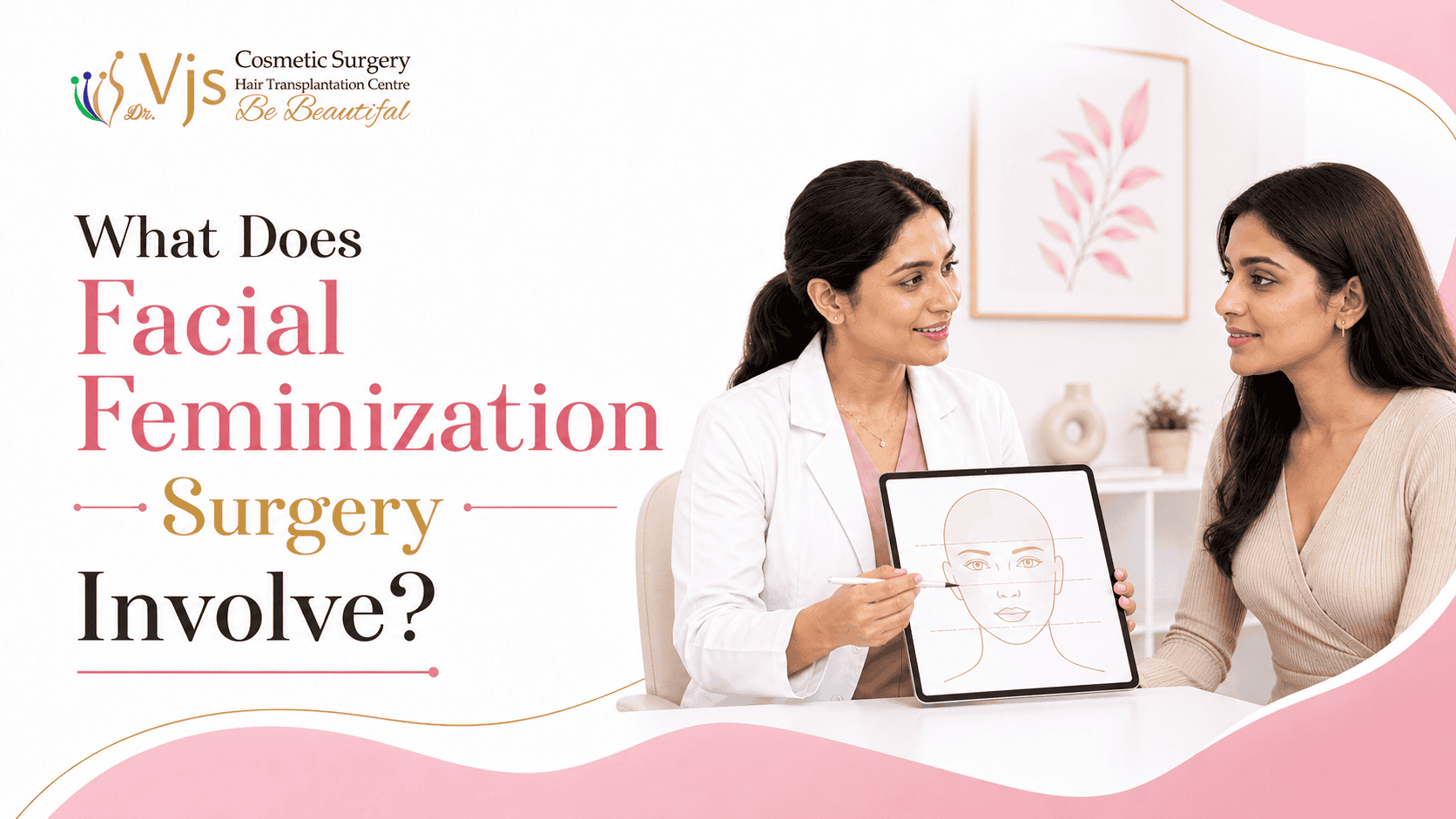

Facial feminization surgery (FFS) is an umbrella term for procedures that may alter selected facial features to create a more feminine appearance. It is not one fixed operation, and not everyone needs or wants the same combination of procedures. Planning should begin with the person’s own goals, facial anatomy, medical history, prior surgery and a realistic discussion of what each procedure can and cannot change.
Forehead and hairline procedures
Forehead contouring may modify the brow area or frontal bone, while a brow lift can change eyebrow position. Hairline advancement is a separate procedure that may reduce forehead height in selected patients. These operations can leave visible or hidden scars and may involve changes in sensation, hair density or hairline shape, so the trade-offs should be discussed before surgery.
Nose and cheek procedures
Rhinoplasty can alter nasal proportions, projection or contour while also needing to preserve or improve breathing where relevant. Cheek augmentation may use implants, fat transfer or other techniques to change mid-face contour. A more feminine appearance is subjective, so the aim should be facial balance and the individual’s stated preferences rather than a universal template.
Jaw, chin, lips and neck
Jaw and chin contouring can reduce or reshape selected bony areas. Lip procedures may alter the distance between the nose and upper lip or change lip volume. Tracheal cartilage reduction can make the laryngeal prominence less visible. Each procedure has its own risks, and combining several operations can affect swelling, recovery time and overall surgical complexity.
How an FFS plan should be built
A consultation should identify which features matter most to the patient and whether surgery is likely to address those concerns. The surgeon should explain alternatives, scar placement, anaesthesia, expected swelling, sensory changes, revision possibilities and how the planned procedures interact. Photos or imaging can support discussion, but they should not be presented as a guarantee of the final result.
Risks and recovery
Potential risks vary by procedure and can include bleeding, infection, wound problems, nerve-related numbness or weakness, asymmetry, scarring, hairline changes, breathing issues after nasal surgery, contour irregularity and the need for revision. Swelling can take time to settle, and the pace of recovery differs considerably between people and between single-procedure and combined operations.
Choosing care based on evidence, not promises
High success-rate claims, guaranteed safety and promises of a particular appearance are not appropriate ways to judge a surgical option. More useful questions include the surgeon’s training for the specific procedure, how often that procedure is performed, how complications are managed, what follow-up is offered and whether the proposed plan reflects your priorities. For general information about cosmetic surgery and related facial procedures, review the relevant service pages. You can also use the contact page to ask what procedures are currently available and whether a consultation is appropriate.
Frequently asked questions
Does facial feminization surgery always involve the whole face?
No. FFS can involve one procedure or a selected combination based on anatomy and personal goals.
Can a surgeon guarantee a natural-looking result?
No. Surgical outcomes vary. The goal should be a realistic, individualized plan with clear discussion of limitations, risks and possible revisions.