Erectile Dysfunction Treatment Cost in Kakinada | Erectile Dysfunction Doctor Kakinada
Free Video Consultation

Erectile Dysfunction Treatment in Kakinada: Causes, Diagnosis & Options

What is Erectile Dysfunction?

Erectile dysfunction (ED) means a persistent difficulty getting or maintaining an erection firm enough for satisfactory sexual activity. It can occur at different ages and is not simply an inevitable consequence of getting older.

ED can sometimes be an early sign of cardiovascular or metabolic disease, so assessment should consider overall health as well as sexual symptoms. VJ Clinics lists a Kakinada location; patients should confirm which ED services and clinicians are available there.

[call_now_section]

Causes of Erectile Dysfunction

ED can result from one or more physical, medication-related, hormonal, neurologic or psychological factors. Common contributors include cardiovascular disease, high blood pressure, diabetes, obesity, smoking, some prescription medicines, nerve injury, low testosterone in selected patients, depression, anxiety, relationship stress and sleep problems.

A sedentary lifestyle may contribute to vascular risk, but it is not the sole explanation for ED. The goal of assessment is to identify likely causes and reversible factors rather than assuming one cause for every patient.

Symptoms of Erectile Dysfunction

Persistent difficulty getting or maintaining an erection is worth discussing with a clinician when it is recurrent, causes concern, or represents a change from your usual sexual function. The aim is not simply to label the symptom: an assessment can help distinguish vascular, metabolic, medication-related, hormonal and psychological contributors and identify any health issues that deserve separate attention.

Some men also notice reduced confidence or relationship stress alongside ED. These experiences can be part of the clinical discussion without assuming that the cause is purely psychological. For an overview of a regenerative treatment that is sometimes marketed for ED, read the clinic’s P-Shot (PRP) evidence, risks and alternatives guide; PRP should not replace evaluation of established treatment options.

  • Being unable to get an erection on most occasions.
  • Being unable to maintain an erection through the act of sexual intercourse 
  • Only being able to have an erection before sexual intercourse, not being able to maintain it.
  • Complete inability to have an erection at all.
  • Needing excessive stimulation to have an erection.

How is Erectile Dysfunction Diagnosed?

ED is usually diagnosed from a confidential medical and sexual history plus a focused examination. Not every patient needs the same panel of tests.

Depending on the history, a clinician may check blood pressure and cardiovascular risk, review medicines and substance use, and order selected blood tests such as glucose or HbA1c, lipids and morning testosterone when indicated. Additional tests are reserved for selected cases.

Treatment cost in Kakinada depends on the underlying cause and chosen treatment rather than on one fixed ED package.

Physical Exam

In order to test and diagnose erectile dysfunction, your doctor might want to conduct a few physical exams on you. This can include a thorough checkup of your penis, testicles as well as the nerves in the area. In a physical exam, the doctors generally try to gather information about how the body reacts to external stimulation.


Blood Tests

The process of diagnosis might also raise the need for a blood test so your doctors can sample and analyse the blood. This is done to ascertain whether any underlying issue could be behind erectile dysfunction. Situations such as a low production of testosterone in the body can also lead to erectile dysfunction.

Analysis of Urine

Just like blood, a urine sample might also be required to check whether there are any underlying, undiagnosed conditions in your body. Illnesses such as diabetes, if left untreated, can lead to the development of erectile dysfunction. 

Ultrasound

In order to make certain that there are no issues when it comes to the supply of blood flow, your doctor might want you to undergo an ultrasound. Ultrasound imaging and videos can help to ascertain whether there is any blockage when it comes to the blood flow to the penis. If there is any blockage, it could be the reason behind your erectile dysfunction.

Psychological Exams

Various mental health struggles, such as stress, anxiety, depression, and PTSD, can manifest in the body in a number of different ways. However, in men, it has the tendency to lead to erectile dysfunction. Therefore, your doctors might make you undergo a psychological examination to ascertain whether this could be the reason behind erectile dysfunction.

How Can Erectile Dysfunction Be Treated?

ED treatment is individualized according to the cause, cardiovascular safety, patient preference and response. Options can include lifestyle and risk-factor management, review of contributing medicines, oral PDE5-inhibitor medicines when appropriate, counseling or sex therapy when psychological factors contribute, vacuum erection devices, injectable or intraurethral medicines in selected patients, and penile prosthesis surgery when other options are unsuitable or ineffective.

Experimental or less-established treatments should be clearly distinguished from therapies supported by stronger evidence. Treatment should not be chosen only by severity or marketed as a guaranteed fix.

Medications

Common oral ED medicines include sildenafil, tadalafil, vardenafil and avanafil. They work by enhancing the nitric-oxide signaling pathway; they do not contain nitric oxide themselves and they require sexual stimulation to help produce an erection.

These medicines are not suitable for everyone. They can be dangerous with nitrate medicines and require medical review in people with certain cardiovascular conditions or important drug interactions. Choice and dose should be prescribed individually.

Psychological Therapy

Psychological and relationship factors can contribute to ED either alone or together with physical causes. Normal physical tests do not automatically mean that a person has a psychological disorder.

Counseling, cognitive-behavioral approaches or sex therapy can be useful when anxiety, depression, trauma, relationship stress or performance concerns are relevant. These may be used alone or alongside medical treatment.

Penis Pumps, Surgery and Implants

A vacuum erection device draws blood into the penis using negative pressure. A constriction ring may then help maintain the erection for a limited period. The device can be effective for selected patients but may cause bruising, discomfort, numbness or difficulty with ejaculation if used incorrectly.

Penile prosthesis surgery is generally considered when less-invasive options are unsuitable or have not worked. Inflatable or malleable implants can provide reliable rigidity, but surgery carries risks such as infection, mechanical failure, pain and the need for future revision.

Exercise

Exercise and management of cardiovascular risk factors can improve general health and may help erectile function in some patients, but exercise is not a treatment for every hormonal cause of ED.

Testosterone treatment is considered only when symptoms and appropriately timed blood tests support testosterone deficiency and after contraindications are reviewed. It should not be started simply because ED is present.

Why Choose Dr VJ's Cosmetic Surgery Clinic?

Seeking help for ED can feel sensitive, but assessment can usually be handled confidentially and without judgment. The purpose of the consultation is to identify likely causes, discuss cardiovascular and medication considerations, and compare appropriate treatment options.

No clinic can promise that treatment will be easy, immediate or successful for every patient.

Experience

Experience is relevant, but patients should verify the qualifications and role of the clinician who will assess and treat ED. Years in practice do not guarantee a particular result.

Ask how the clinician evaluates cardiovascular risk, which treatments are routinely offered, what alternatives are available and how response or side effects will be followed.

Expert Care

The treatment plan should be chosen with the patient after discussing benefits, risks, alternatives, contraindications and preferences. Comfort and privacy matter, but no team can guarantee the “best possible” treatment option or a symptom-free experience.

Technical Advancements

New ED treatments and devices continue to be studied, but newer technology is not automatically better. Patients should ask whether a proposed treatment is established or investigational, what evidence supports it, what side effects have been reported and whether less-invasive alternatives are available.

If platelet-rich plasma or a P-Shot is being discussed, review the evidence, risks and alternatives for P-Shot treatment before deciding; it should not replace a standard ED assessment. For current Kakinada consultation details, contact VJ Clinics.

Personalised Treatment

There is no one-size-fits-all ED treatment. A personalised plan should be based on the likely cause, cardiovascular safety, other medicines, fertility or relationship considerations when relevant, patient preferences and response to previous treatment.

Personalisation does not guarantee success; the plan may need adjustment if a treatment is ineffective or causes side effects.

Cost-Effective Answers

Erectile dysfunction treatment cost in Kakinada depends on the cause, investigations required and treatment chosen. Costs differ substantially between a consultation and oral medicine, a vacuum device, injections or penile-prosthesis surgery.

A written estimate should explain what is included. Treatment should not be described as universally cost-effective, and price alone should not determine which option is medically appropriate.

Where Can You Find Us?

  • Call us at 9849797776
  • Write to us: chevuru.vijay@gmail.com
  • Visit our clinic for an official consultation at either of the following addresses: 
  • Dr VJs Cosmetic Surgery & Hair Transplantation Centre, 4th Floor, KGH Down Rd, opp. Indus Hospital, Jagadamba, Jagadamba Junction, Visakhapatnam, Andhra Pradesh 530002
  • Dr VJs Cosmetic Surgery & Hair Transplantation Centre, Citi Medi Plaza, 22-1-32, PR, College Rd, Kakinada, Andhra Pradesh 533001
[call_now_section]

Related Posts

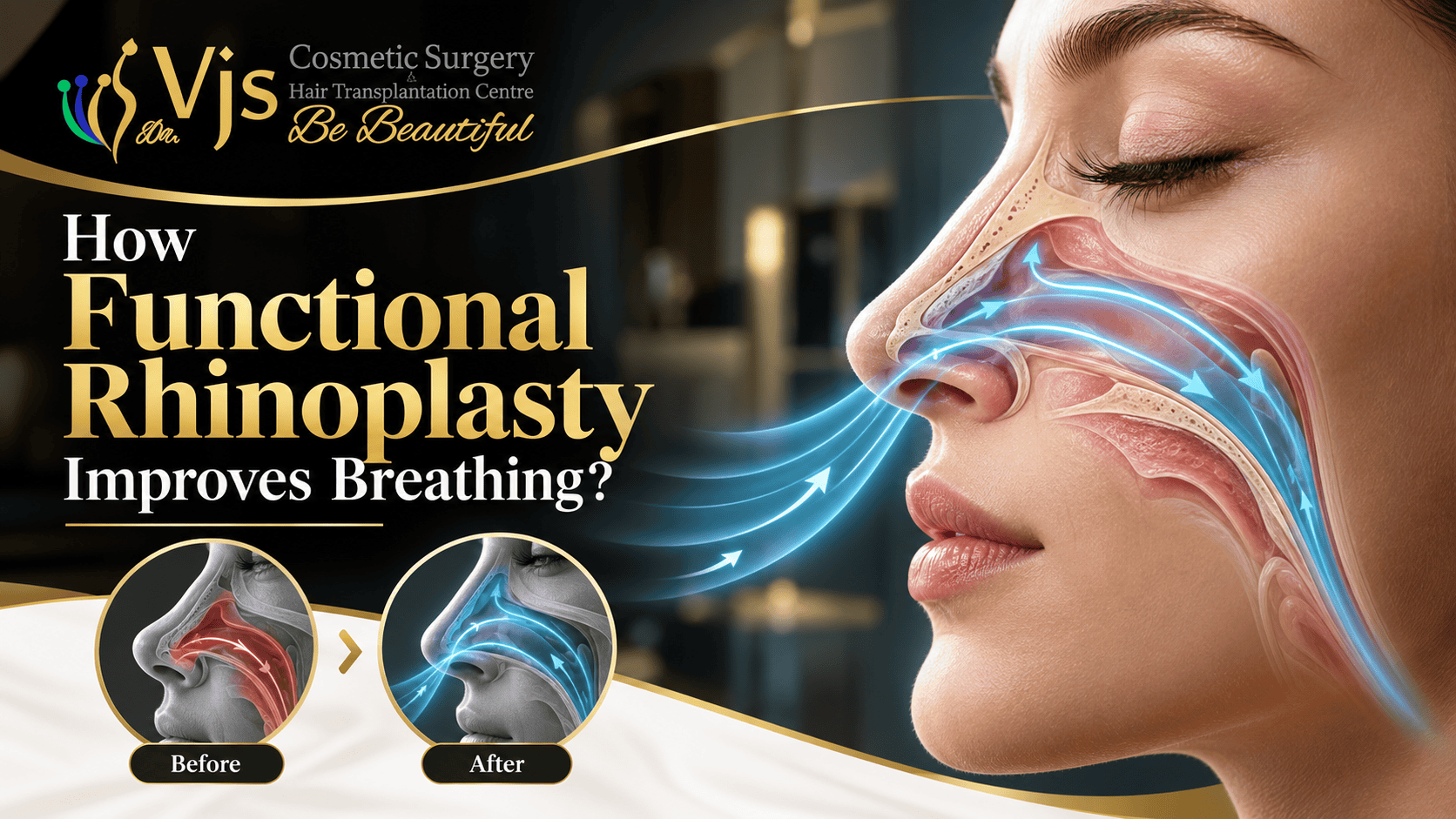
Close-up of a woman's face showing nasal passages before and after rhinoplasty.

How Functional Rhinoplasty Improves Breathing?

Loading

Functional Rhinoplasty is a type of surgery that works to improve airflow through the nasal passages while fixing nasal obstructions such as septal deviation, nasal valve collapse, turbinate enlargement and nasal irregularities that restrict breathing. The aim of functional rhinoplasty in Visakhapatnam is to enlarge the airflow, it maintains the proper alignment and structural support so that the person can breathe easily and take in air without any disruptions.  When people hear the word rhinoplasty, they start thinking about the appearance of the nose, but in reality, it is about fixing the nose within itself so that a person can breathe normally. Rhinoplasty is of two types: cosmetic rhinoplasty, which mainly focuses on the appearance of the nose, and functional rhinoplasty, which focuses more on fixing irregularities.  Guidelines to follow for Functional Rhinoplasty People who are going through breathing problems on a daily basis. They must undergo functional rhinoplasty for breathing under the personal guidance of a professional doctor. And they must follow the steps that are given by the doctors.  Famous Myths About Functional Rhinoplasty Breathing  In India, most of the population is not really aware of rhinoplasty surgery. They perceive it as a normal surgery for the aim of changing their appearance. Here are the common myths that must be clarified –  Causes of the nasal obstructions Nasal obstructions can be a major reason for breathing difficulty; they happen when the airflow of the nose is restricted. The main reasons are swelling, inflammation and structural blockage. However, there are structural causes of restricted breathing.  Final Takeaways  Nasal obstruction is a common issue rising in the country, so it is important to identify the issue and get the right guidance under Dr. C.Vijay Kumar, who has years of experience in the field of cosmetic surgery. VJS Cosmetic and Hair Transplant Centre is a reliable clinic in Vizag, Andhra Pradesh, which performs functional rhinoplasty breathing Visakhapatnam region effectively. Patients who are suffering from nasal problems must visit the clinic. Frequently Asked Questions There is no fixed age for functional rhinoplasty surgery, but it is recommended that the individual be over the age of 15 – 16 years to go for treatment. 2. Does the patient travel after surgery? It is recommended that the individual restrict travel for the upcoming days after the surgery.  3. Can rhinoplasty be done during a cold? If a client has a cold, they should immediately inform the surgeon so they can postpone the rhinoplasty. 4. What prescription should I take after surgery? The patient needs to focus on rest and avoid transportation. Quit smoking and follow a healthy lifestyle. 5. Does previous surgery affect functional rhinoplasty surgery? The individual needs to share all previous surgeries with the surgeon so that the surgeon can operate accordingly.
Read More »
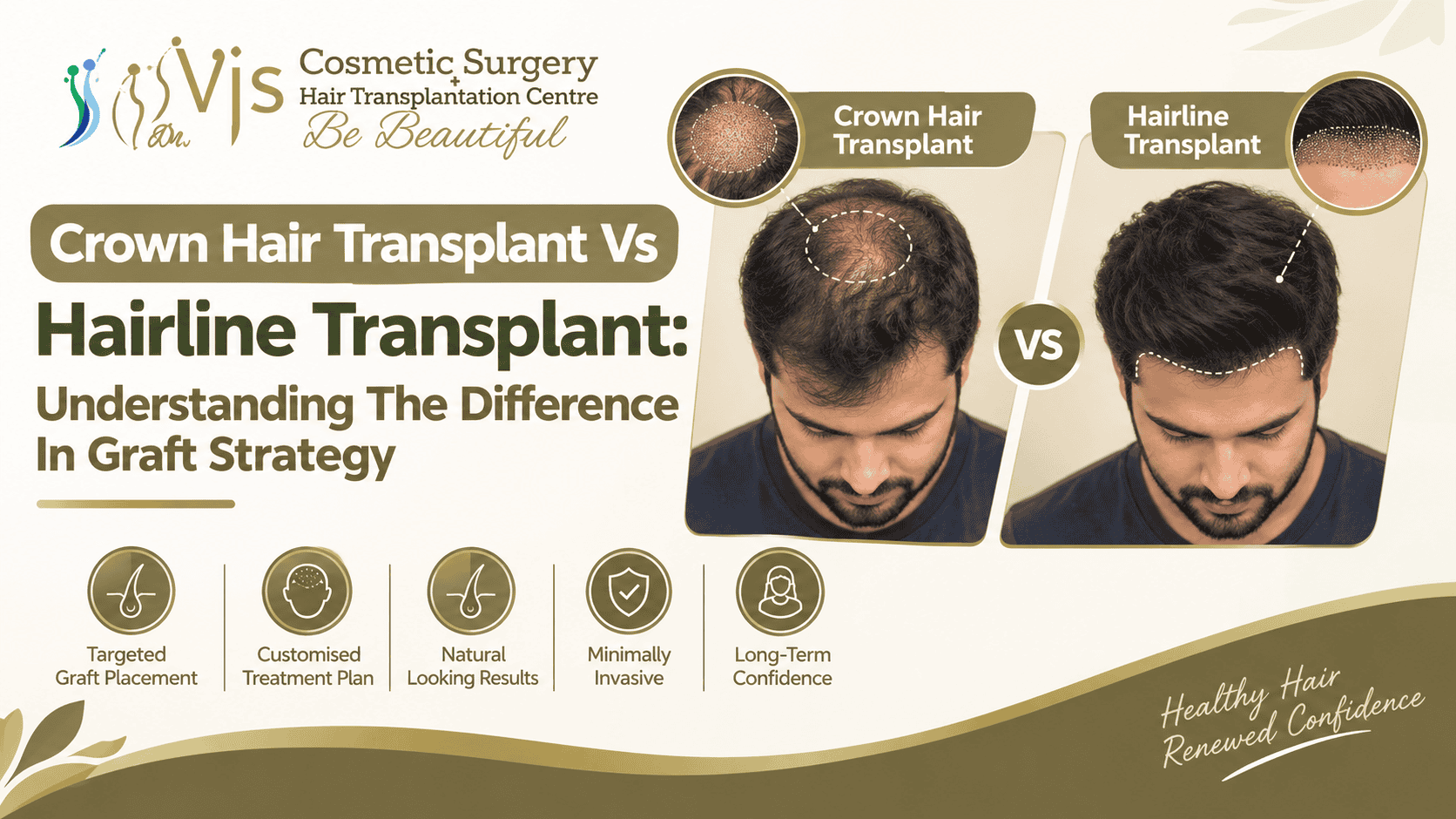
Comparison of crown hair transplant and hairline transplant procedures.

Crown Hair Transplant Vs Hairline Transplant: Understanding The Difference In Graft Strategy

Loading

Hair loss can be a harrowing experience for men and women, and it tends to impact confidence and self-esteem. Hair transplant is a long-term solution to baldness and thinning hair, but it is a subtle and painstaking procedure and a combination of medical science and art.  Hair transplant is not just about covering the bald area, as hair loss can affect the hairline, crown or both and covering each area requires different surgical procedures for both crown vs hairline hair transplant. The crown vs hairline hair transplant differences matter because of graft count, growth direction, healing time and donor management.  Understanding the crown vs hairline hair transplant comparison techniques can help patients plan their hair transplant treatment with clear expectations, especially when both areas are affected at the same time. What Is The Difference? Crown Vs. Hairline Hair loss may affect every part of the scalp in different ways, including the hairline and crown; these two most common areas are treated with hair transplantation surgery.  Restoring these areas requires different surgical considerations; hair transplant for the hairline usually creates a natural-looking frontal frame for the face. Whereas crown hair transplant usually requires more grafts and takes longer to show denser visibility. Why Is Graft Allocation Important? The average patient has 5000 to 8000 grafts available from the donor area in a lifetime, depending on the density, hair characteristics and long-term donor preservation requirements.  The crown alone requires between 2000 to 3500 grafts while producing a moderate visual improvement. Whereas, the hairline can be restored with 1500 to 2500 grafts and deliver a dramatic face transformation.  Why Does Single Hair Grafts Matter At The Hairline? To create a soft transition at the hairline, single hair follicle units are valuable, and surgeons may use larger follicle units behind the hairline for increased density. In this scenario, the objective is not to place as many grafts as possible, but the primary goal is to create a natural transition from forehead to scalp using donor follicles efficiently.  Crown Restoration Requires Spiral Reconstruction If grafts were not implemented with respect to the natural orientation, then the crown may look unnatural. The surgeon must consider: More Grafts May Be Required for Crown Restoration The most important difference between hairline and crown transplantation is graft economics. A modest number of grafts can create a significant improvement along a receding hairline because all the new hairs are placed together in a highly visible area at the front of your face. Whereas, in crown hair transplant, a large thinning region may require a sufficient number of grafts to create meaningful visual coverage. Densely visual appearance may depend on factors including: Hair Transplant Depends On The Donor Hair Availability  Hair transplant does not create new follicles but redistributes existing follicles from the donor region to the bald area, and a surgeon may examine the following before starting hair transplantation surgery: Conclusion  The right hair transplantation treatment for the hairline, the crown or both depends on the patient’s pattern of loss, donor capacity and age. In the crown and hairline, neither area needs more grafts automatically, but the hairline usually requires greater density and effective graft selection because the face frame depends on this.  Typically, the crown uses a lower density per square centimeter, but it can become the larger graft consumer because of its broad circular area. The best hair transplant plan is not the one with the highest graft numbers, although it is one that can create the greatest cosmetic improvement while protecting enough donor hair for the future. If you are deciding between a crown vs hairline hair transplant in Visakhapatnam, a full scalp and donor assessment can help to determine where your available graft will provide the most value. You can book an appointment with VJ’s Cosmetic Surgery and Hair Transplantation Centre for hair restoration and cosmetic surgery consultations with treatment planning on the basis of your concern. Dr. C Vijay Kumar has more than 40 years of clinical experience, and you can receive clear information about crown Vs. hairline transplantation surgery and different graft strategies.  FAQs How many grafts are required for a hairline?  There is no fixed number, but restoring the hairline typically requires between 1000 and 2500 grafts, and proper measurements are needed before estimating a graft target.  Why is it called the crown graft Hungary area?  The crown can cover a large circular region and requires a follicle to follow a spiral pattern, which is why an aggressive crown needs a sufficient portion of the patient’s donor supply. What should I cover first with a crown or hairline? When donor grafts are limited, surgeons mainly give more priority to frontal framing; however, the right sequence depends on stability and extent of your hair loss.  How long does it take to get a hair transplant result?  Hair transplantation is a gradual process, and transplanted hair may shed before new growth develops, but your surgeon may provide a more specific timeline based on your procedure.

Read More »
```html ```