
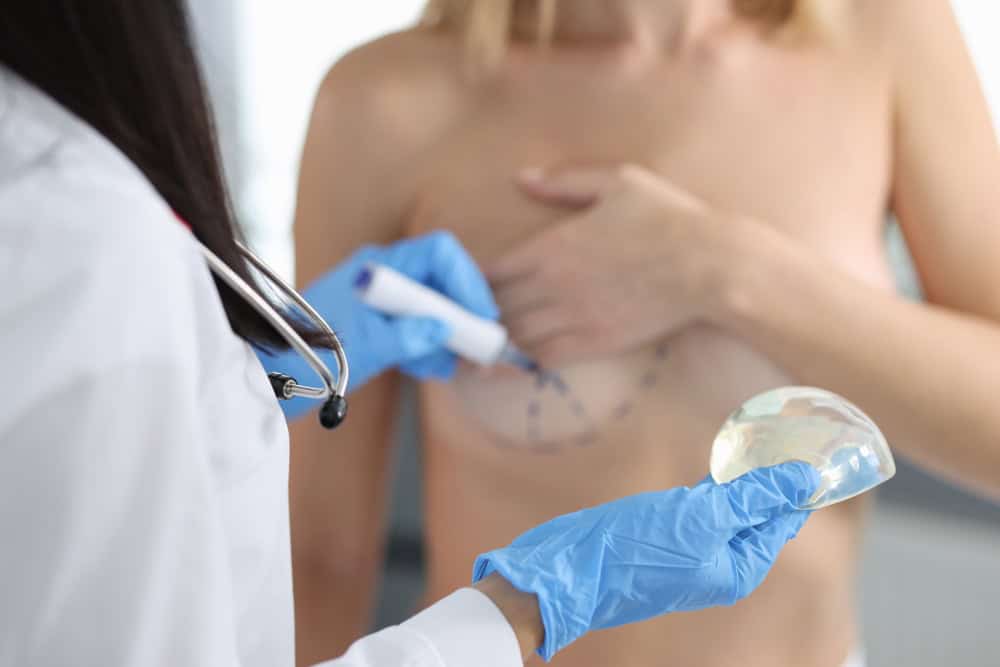

Breast fat transfer is one option for adding modest breast volume using a patient’s own fat rather than an implant. It combines liposuction from a suitable donor area with processing and carefully placing the harvested fat into the breast. Choosing it should be based on anatomy, available donor fat, desired change and medical assessment—not pressure to alter a naturally small breast size.
Who may be considered for fat transfer?
A potential candidate generally needs enough harvestable fat, stable health and expectations that match what the procedure can realistically achieve. Fat transfer is usually better suited to a relatively modest increase in volume or selected contour corrections than to a large size change. Previous breast surgery, significant asymmetry, future weight changes and screening history can also influence planning.
How it differs from breast implants
Because the transferred material comes from the patient, no breast implant is placed. That does not make the procedure risk-free or automatically more “natural” in every case. Some of the transferred fat may not survive, so the retained volume can be less than the amount initially injected and repeat treatment may sometimes be discussed.
Patients comparing options should review the main breast augmentation guide, which covers implant-based and other planning considerations rather than assuming one technique is best for everyone.
Benefits and trade-offs
A possible advantage is that liposuction can address a separate donor area while providing fat for breast contouring. However, the donor area also has its own swelling, bruising, contour and recovery considerations. Breast-related risks can include infection, fat necrosis, oil cysts, calcifications, asymmetry and loss of some transferred volume.
Scars and recovery are individual
The incisions are generally smaller than those used for many implant procedures, but scarring is still possible and cannot be described as invisible or negligible for every patient. Recovery depends on the amount of liposuction performed, treatment areas, individual healing and whether other procedures are combined.
Because the operation includes liposuction, the liposuction guide is useful for understanding donor-site limitations and risks. If excess breast volume rather than added volume is the main concern, see the breast reduction overview.
For an individual discussion of fat transfer, implants or whether no procedure is appropriate, use the contact page to arrange a consultation in Vizag.