
Arm Lift Surgery Cost in Visakhapatnam, Andhra Pradesh, India
Free Video Consultation

Arm lift

Video

CALL US TODAY
☎ 9849797776

Arm Lift Surgery in India

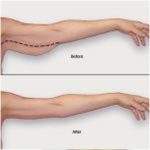
If you are concerned for the excess skin and fat in the arms and having imperfections in arms then Arm Lift Surgery In Andhra Pradesh is the best solution for you. This cosmetic procedure enables the removal of excess skin and the fat from arms and even corrects the imperfections of the upper arms to improve the overall physical appearance of the arms.

Slimming arm before and after, arm contouring results, VJ Clinics body transformation treatment, non-invasive arm fat reduction, aesthetic arm contouring solutions.

When Brachioplasty in India Can Be Option?

Brachioplasty or Arm Lift can be chosen as the cosmetic solution in the following cases

  • When you have sagging skin due to extreme weight loss
  • Sagging and stretched skin due to the age factor
  • Tenacious fat pockets
  • Sagging arms that become a hindrance for proper functioning for doing normal activities
  • The desire to gave better looking and toned arms

Candidates for Arm Lift Procedure

Candidates are good for this cosmetic surgery if they have a large amount of weight and loose skin. Patient must have aged more than 18 and must be physical, mentally fit and prepared for the surgery. Candidates that have realistic expectations from the surgery are considered as good candidates.

Procedure

  • Initially, general anaesthesia is given to the patient for painless and comfortable surgery. It is just the procedure of an hour.
  • Then cosmetic surgeon made the incision along with the side of the upper arm
  • Unwanted fat, tissues and the excess skin is removed
  • The incision is closed with stitches to restore the nice shape of the arm
 
The incision made in the inner side or upper arm depends on the amount of excess skin and fat but usually are made inside or back side of the arm that continues down from the Axilla just short of the elbow. In the last of surgery, tissues are tightened and restructured to give firm and smooth contour.

Recovery and Results

After surgery arms are bandaged for at least week until the removal of stitches. The patient can resume his work after a week but the lifting of heavy objects and the activities that require vigorous arm movements must be avoided for at least six weeks.

After surgery patient can have grafting results as perfect shaped arms in proportion with your body are restored without any side effects and discomfort

Arm Lift Cost in Visakhapatnam

We provide this treatment at affordable cost by making sure that patient has not to sacrifice the quality of treatment at any level starting from the knowledgeable consultation, utmost care pre and post surgery and during the surgery.

Cost of the procedure varies with the extent of the problem, procedure, choice of centre and surgeon, expectations of the patient but on an average basis, it can vary from 2000 USD to 2500 USD in India.

CALL US TODAY
☎ 9849797776

Related Posts

Comparison of crown hair transplant and hairline transplant procedures.

Crown Hair Transplant Vs Hairline Transplant: Understanding The Difference In Graft Strategy

Loading

Hair loss can be a harrowing experience for men and women, and it tends to impact confidence and self-esteem. Hair transplant is a long-term solution to baldness and thinning hair, but it is a subtle and painstaking procedure and a combination of medical science and art.  Hair transplant is not just about covering the bald area, as hair loss can affect the hairline, crown or both and covering each area requires different surgical procedures for both crown vs hairline hair transplant. The crown vs hairline hair transplant differences matter because of graft count, growth direction, healing time and donor management.  Understanding the crown vs hairline hair transplant comparison techniques can help patients plan their hair transplant treatment with clear expectations, especially when both areas are affected at the same time. What Is The Difference? Crown Vs. Hairline Hair loss may affect every part of the scalp in different ways, including the hairline and crown; these two most common areas are treated with hair transplantation surgery.  Restoring these areas requires different surgical considerations; hair transplant for the hairline usually creates a natural-looking frontal frame for the face. Whereas crown hair transplant usually requires more grafts and takes longer to show denser visibility. Why Is Graft Allocation Important? The average patient has 5000 to 8000 grafts available from the donor area in a lifetime, depending on the density, hair characteristics and long-term donor preservation requirements.  The crown alone requires between 2000 to 3500 grafts while producing a moderate visual improvement. Whereas, the hairline can be restored with 1500 to 2500 grafts and deliver a dramatic face transformation.  Why Does Single Hair Grafts Matter At The Hairline? To create a soft transition at the hairline, single hair follicle units are valuable, and surgeons may use larger follicle units behind the hairline for increased density. In this scenario, the objective is not to place as many grafts as possible, but the primary goal is to create a natural transition from forehead to scalp using donor follicles efficiently.  Crown Restoration Requires Spiral Reconstruction If grafts were not implemented with respect to the natural orientation, then the crown may look unnatural. The surgeon must consider: More Grafts May Be Required for Crown Restoration The most important difference between hairline and crown transplantation is graft economics. A modest number of grafts can create a significant improvement along a receding hairline because all the new hairs are placed together in a highly visible area at the front of your face. Whereas, in crown hair transplant, a large thinning region may require a sufficient number of grafts to create meaningful visual coverage. Densely visual appearance may depend on factors including: Hair Transplant Depends On The Donor Hair Availability  Hair transplant does not create new follicles but redistributes existing follicles from the donor region to the bald area, and a surgeon may examine the following before starting hair transplantation surgery: Conclusion  The right hair transplantation treatment for the hairline, the crown or both depends on the patient’s pattern of loss, donor capacity and age. In the crown and hairline, neither area needs more grafts automatically, but the hairline usually requires greater density and effective graft selection because the face frame depends on this.  Typically, the crown uses a lower density per square centimeter, but it can become the larger graft consumer because of its broad circular area. The best hair transplant plan is not the one with the highest graft numbers, although it is one that can create the greatest cosmetic improvement while protecting enough donor hair for the future. If you are deciding between a crown vs hairline hair transplant in Visakhapatnam, a full scalp and donor assessment can help to determine where your available graft will provide the most value. You can book an appointment with VJ’s Cosmetic Surgery and Hair Transplantation Centre for hair restoration and cosmetic surgery consultations with treatment planning on the basis of your concern. Dr. C Vijay Kumar has more than 40 years of clinical experience, and you can receive clear information about crown Vs. hairline transplantation surgery and different graft strategies.  FAQs How many grafts are required for a hairline?  There is no fixed number, but restoring the hairline typically requires between 1000 and 2500 grafts, and proper measurements are needed before estimating a graft target.  Why is it called the crown graft Hungary area?  The crown can cover a large circular region and requires a follicle to follow a spiral pattern, which is why an aggressive crown needs a sufficient portion of the patient’s donor supply. What should I cover first with a crown or hairline? When donor grafts are limited, surgeons mainly give more priority to frontal framing; however, the right sequence depends on stability and extent of your hair loss.  How long does it take to get a hair transplant result?  Hair transplantation is a gradual process, and transplanted hair may shed before new growth develops, but your surgeon may provide a more specific timeline based on your procedure.

Read More »
Comparison of gland tissue and chest fat in gynecomastia treatment.

Gynecomastia: Gland Tissue Vs Chest Fat: The Biological Difference That Dictates Your Treatment

Loading

Enlarged chest tissue among men is common, but it causes confusion among them as they observe changes in their chest appearance. Sometimes this occurs during adolescence and disappears on its own with time, but some men experience gynecomastia later in their life. This condition can occur due to anything including hormonal imbalance to the use of certain medications.​ Understanding gynecomastia Vs. fat can be confusing because both conditions can make a man’s chest look enlarged. However, both conditions are different; gynecomastia is related to the growth of glandular breast tissue, while chest fat is associated with fatty tissues stored around the chest. Knowing the gynecomastia gland Vs. fat differences can help you understand why your chest looks enlarged and what type of treatments can be appropriate.​ Recognizing the gynecomastia vs. fat comparison can also make it easier to discuss chest appearance during a professional examination. Factors such as body weight, hormones, age, genetics and lifestyle can all impact the chest.​ What Is Gynecomastia? An enlargement of male breast tissue, and it commonly occurs due to an imbalance between estrogen and testosterone activity in the body. It is different from normal fat; it involves actual enlargement of glandular tissues around the nipple area, and it can affect one side of the chest or both sides. Gynecomastia can occur in different stages of life, including: In some conditions, it occurs temporarily, especially during puberty, but others may persist and become a long-term concern. If you do a comparison between gynecomastia and chest fat, the presence of firm tissue around the nipples is one of the important clues that may point to gynecomastia.​ What Is Chest Fat? Excess fatty tissue stored around the chest is referred to as chest fat, and generally, it is related to whole-body fat instead of enlargement of the breast gland. Men who gain weight may observe additional fat around several areas such as: The other difference is that chest fat may feel softer than glandular tissue, and its appearance also changes because overall body weight increases or decreases. In the comparison between the two, chest fat may be associated with adipose tissue, whereas gynecomastia involves glandular breast tissue.​ Gynecomastia Vs. Chest Fat: Key Differences The primary difference between gynecomastia Vs. chest fat involves the type of tissue, as gynecomastia involves glandular breast tissue and chest fat consists mainly of excess adipose tissue. Understanding the difference is important because fat reduction and glandular tissue removal are not the same treatment options. Generally, chest fat feels soft and evenly distributed, while gynecomastia may feel firmer, particularly around the nipple or areola. Apart from this, a firm or rubbery area under the nipple can indicate gynecomastia, but physical evaluation is needed to determine the exact cause. Chest fat is directly associated with body fat; losing body weight can reduce the amount of fat stored around the nipples.  But in the case of gynecomastia, it may remain even after reduced body weight, as glandular tissue does not necessarily disappear with dieting or exercising. Gynecomastia can create a more prominent or puffy skin around the nipple and areola, whereas chest fat enlargement is often more spread across the chest. However, appearance alone cannot always differentiate gynecomastia vs. chest fat. Exercise can reduce overall body fat and help to improve chest muscles. This method is particularly helpful when excess chest fat is primarily concerned, but exercise does not directly reduce enlarged glandular breast tissue.   Chest fat occurs due to excess calorie intake and weight gain, whereas gynecomastia can have several possible causes, including hormonal changes, certain medications and is common with increasing age. Treatment for chest fat may involve weight management, exercise, nutrition and body fat reduction, but gynecomastia may need a different approach depending on its cause after examination.​ Conclusion Understanding gynecomastia vs chest fat is important because these two conditions may look similar but involve different types of tissues and require different approaches to treatment. Chest fat is commonly associated with overall body fat levels and can be reduced with weight management and exercise, but gynecomastia may remain even after exercise and weight loss. Suppose you are in doubt about gynecomastia Vs. fat in Visakhapatnam, then avoid relying only on appearance. A professional evaluation can help to identify the cause and guide you toward a treatment plan. For more information about gynecomastia Vs. chest fat, you can book an appointment with VJs Cosmetic Surgery and Transplantation Centre. Dr. C Vijay Kumar has more than 40+ years of experience in clinical practice.   FAQs​ Can chest fat look like gynecomastia? Yes, excessive fat around the nipples in men can create an appearance similar to gynecomastia, and a professional examination is required to identify whether it is caused by fat or glandular tissue. Can losing weight get rid of gynecomastia? Reducing overall body weight can reduce the extra fat around the chest but may not remove established glandular breast tissue. Can chest exercises particularly burn chest fat? No, chest exercises only strengthen and build the chest muscles but cannot burn chest fat specifically. What treatments are available for persistent gynecomastia? The treatments may depend on the cause and severity, and options may involve observing the causes, selected medical treatments or surgery to remove excessive fat.

Read More »
```html ```