
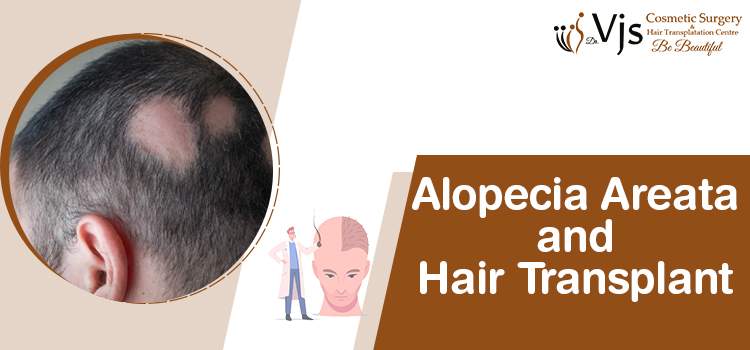

Alopecia areata is an autoimmune condition that can cause one or more patches of hair loss on the scalp, beard, eyebrows or other hair-bearing areas. It behaves differently from androgenetic (pattern) hair loss, so it should not be treated as though a hair transplant is automatically the next step.
Why diagnosis matters in alopecia areata
The immune system can temporarily disrupt hair growth in affected follicles. The pattern may remain limited, recur or involve larger areas, and the course can be difficult to predict. Patchy loss, eyebrow or beard involvement, nail changes, scalp inflammation or rapid progression should be assessed by a qualified clinician.
For a broader explanation of different causes of thinning and shedding, see the Hair Loss guide.
Medical treatment usually comes before surgery
Management depends on the extent, duration and activity of the condition, as well as age, medical history and previous treatment. A dermatologist or other appropriately qualified clinician may discuss topical, injected or systemic therapies in selected cases. These treatments can have side effects and contraindications, and no medicine should be started, stopped or changed based only on online information.
Why a hair transplant is not a standard treatment for active alopecia areata
Hair transplantation moves follicles from one area to another; it does not treat the autoimmune process itself. If disease activity continues, transplanted or surrounding hair may still be affected. For that reason, surgery is generally not approached in the same way as transplantation for stable pattern hair loss.
In selected, long-standing and clinically stable cases, a specialist may discuss whether surgery has any role after reviewing disease history, donor-site behaviour and the possibility of recurrence. Even then, suitability is individualized and outcomes cannot be guaranteed.
Questions to discuss before considering any procedure
- Is the diagnosis definitely alopecia areata, or could another condition be causing the patch?
- Is the disease currently active or has it been stable?
- What medical options are appropriate before surgery is considered?
- Is the donor area unaffected and likely to remain usable?
- What is the risk that hair loss could recur after treatment?
Where hair transplant information fits
The main Hair Transplant guide explains how donor-based surgery is planned for suitable forms of hair loss, including its limitations and risks. That information should not be read as a recommendation that every person with alopecia areata should undergo transplantation.
If you have patchy hair loss and want an individual evaluation, use the Contact page to request a consultation. The decision should follow diagnosis and review of disease activity rather than promotional claims about a single procedure.