
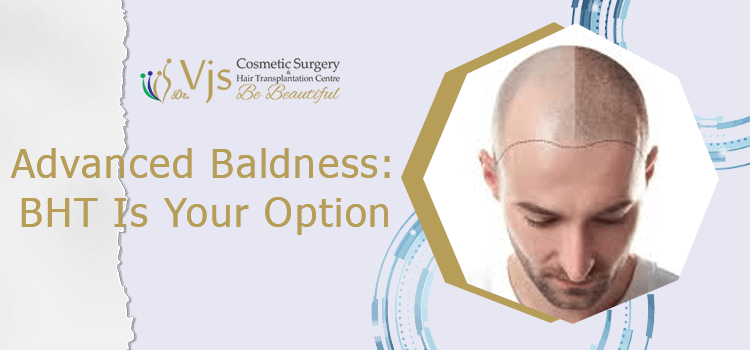

When body hair may be considered
For people with advanced hair loss, the scalp donor area may not contain enough suitable follicles to meet every restoration goal. In selected cases, hair from the beard, chest or another body area may be considered as an additional donor source. This is not automatically the next step for everyone with extensive baldness, and it does not guarantee complete scalp coverage.
A proper assessment should first confirm the pattern and cause of hair loss, the stability of the condition and the quality of the scalp donor area. The broader hair-loss guide explains why diagnosis matters before planning surgery.
How body hair differs from scalp hair
Body hair can differ from scalp hair in calibre, curl, colour, growth cycle and maximum length. These differences affect where transplanted follicles may blend most naturally. Beard hair, for example, is often coarser than scalp hair, while chest hair may have a shorter growth phase. Because of these differences, body hair is generally used selectively rather than treated as a simple substitute for scalp donor hair.
The main Body Hair Transplant guide covers how donor-site characteristics are assessed in more detail.
Who may be assessed for body-hair donation?
Evaluation may be relevant when scalp donor supply is limited, previous surgery has reduced available donor hair, or a surgeon is planning a conservative repair or density-support strategy. Suitability depends on the individual rather than on a particular baldness grade alone.
- Enough usable follicles must be present in the proposed body donor area.
- The characteristics of those hairs should be reasonably compatible with the intended recipient zone.
- Scarring, skin type, prior procedures and healing history need to be considered.
- The plan should account for future progression of non-transplanted scalp hair.
FUE and body-hair extraction
Body-hair harvesting is commonly performed with an FUE-style approach, in which individual follicular units are removed through small punch sites. FUE avoids a linear strip scar, but it is not scar-free: small dot-like marks, pigment changes or textural changes can occur, and visibility varies with skin, hair, healing and the size and spacing of extraction sites.
Donor conservation is especially important when the scalp donor reserve is already limited. Removing too many follicles from any donor area can leave visible thinning or an uneven appearance.
Why full coverage cannot be promised
The number of follicles that can be safely harvested is limited. Advanced hair loss may involve a recipient area much larger than the available donor supply. A responsible plan therefore prioritises distribution, hairline design, visual framing and long-term donor preservation rather than promising a fixed graft count or full coverage in one sitting.
Questions to discuss before deciding
- What is the diagnosis and is the hair loss still progressing?
- How strong is the scalp donor area before body hair is considered?
- Which body donor source is being proposed, and why?
- What differences in texture or growth should be expected?
- What donor-site scars or pigment changes are possible?
- Would a staged plan be safer for donor preservation?
If you are considering surgical restoration, use the contact page to arrange an assessment focused on diagnosis, donor capacity and realistic treatment goals.